V&A
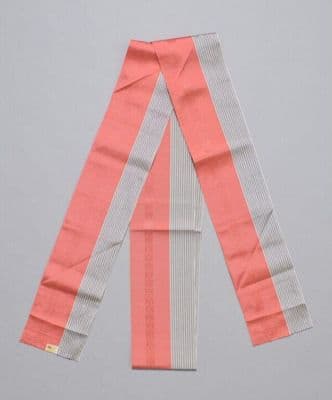
Pink Cotton Koshi-himo with Blue White Striped Border
Japanese Traditional · 1960s · Japanese
Production
mass-produced
Material
cotton
Culture
Japanese
A traditional Japanese koshi-himo waist cord constructed from cotton fabric in a coral pink base color with blue and white striped borders running along both long edges. The cord measures approximately 3-4 inches in width and extends to considerable length for wrapping around the waist multiple times. The striped borders feature narrow alternating blue and white lines that create a clean geometric contrast against the solid pink center panel. The fabric appears to be a plain weave cotton with a smooth, lightweight construction typical of undergarment accessories. The cord shows precise straight edges and even color distribution, indicating machine production methods common in 1960s Japanese textile manufacturing.
belt
Connected To
67%
Worn with·jubanWorn with·kimonoTechnique·machine-weaving
SHARED50 years
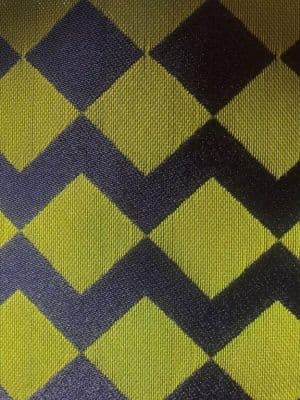
These two Japanese undergarments reveal how traditional kimono accessories evolved through decades of changing materials and aesthetics. The chartreuse obi's aggressive zigzag pattern in synthetic polyester twill speaks to the 1970s embrace of bold graphics and artificial fibers, while the coral and blue striped koshi-himo maintains the restrained geometry of earlier cotton weaving traditions.
Text64%
Image65%
Worn with·jubanWorn with·kimono
SHARED50 years
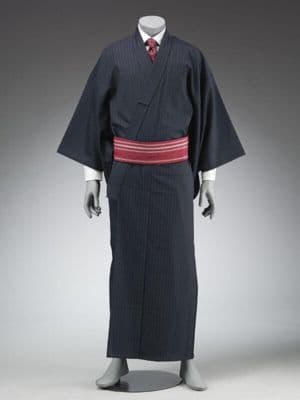
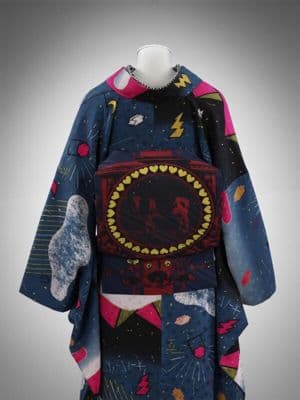
The navy kimono's wide obi and the delicate pink koshi-himo represent two ends of the Japanese sash spectrum — one a bold statement piece that commands the silhouette, the other a whisper-thin undergarment meant to secure layers beneath. What connects them across fifty years is their shared geometry of wrapping and binding, the way both transform the body through careful tension and placement rather than Western tailoring's darts and seams.
50%
Worn with·kimonoTechnique·machine-weaving
SHARED50 years
Text65%
Worn with·obiTechnique·machine-weaving
SHARED40 years
Text66%
Echoes Across Time
Japanese Traditional → Japanese Traditional · 50yr67%
SHARED
These two Japanese undergarments reveal how traditional kimono accessories evolved through decades of changing materials and aesthetics. The chartreuse obi's aggressive zigzag pattern in synthetic polyester twill speaks to the 1970s embrace of bold graphics and artificial fibers, while the coral and blue striped koshi-himo maintains the restrained geometry of earlier cotton weaving traditions.
Worn with·jubanWorn with·kimonoTechnique·machine-weaving
Pull the Thread→
Follow this garment wherever the graph leads