V&A
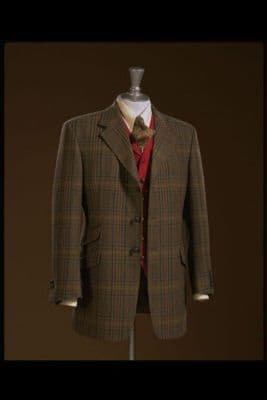
Brown Wool Tweed Hacking Jacket
2020s · 1990s · British
Designer
Henry Poole for Daks-Simpson
Production
ready-to-wear
Material
wool tweed
Culture
British
Movement
Quiet Luxury
Influences
traditional British sporting dress · Savile Row tailoring
A traditional British hacking jacket in brown wool tweed with subtle plaid patterning in earth tones. The jacket features classic country tailoring with a three-button front closure, notched lapels, and structured shoulders. A burgundy waistcoat is layered underneath, creating the traditional three-piece sporting ensemble. The jacket displays characteristic hacking details including flap pockets and a longer length suitable for horseback riding. The tweed shows a complex weave pattern typical of Scottish or English mills, with multiple colored threads creating depth and texture. White shirt collar and burgundy tie complete the formal country gentleman's attire, representing the enduring appeal of traditional British sporting dress in 1990s fashion.
jacketregular fithip length
Connected To
Movement·Quiet LuxuryWorn with·dress shirtTechnique·hand-weaving
Pull the Thread→
Follow this garment wherever the graph leads