V&A
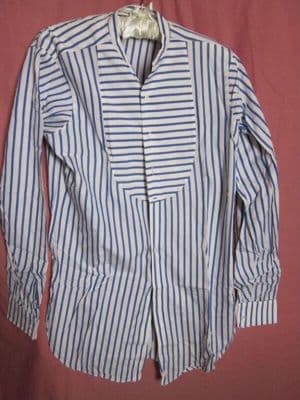
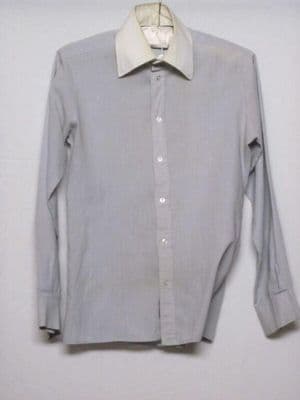
Light Gray Cotton Dress Shirt Cream Collar
1970s · 1970s · French
Designer
Santana
Production
ready-to-wear
Material
cotton
Culture
French
Movement
Hippie / Counterculture
Influences
1970s contrast collar styling
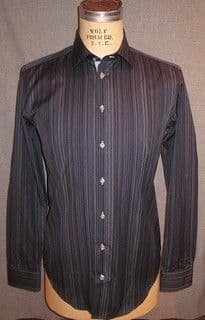
A formal dress shirt in light gray cotton with contrasting cream collar and cuffs. The shirt features a classic point collar, full-length sleeves with button cuffs, and a front button placket with white buttons. The body is cut in a fitted silhouette typical of 1970s tailoring, with clean lines and precise construction. The contrast collar and cuffs create a distinctive formal aesthetic popular in European menswear of the period. The shirt appears to be part of a coordinated suit ensemble, demonstrating the attention to detail characteristic of French tailoring during the Glam Rock era.
shirt/blouseregular fithip length
Connected To
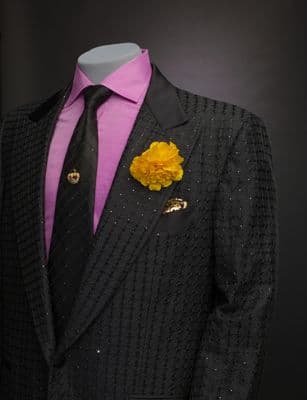
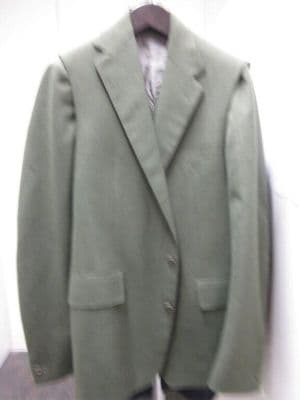
Worn with·suit jacketWorn with·tie
SHARED30 years · cross-culture
That hot pink shirt with its French cuffs and formal proportions is pure peacock dressing — the kind of calculated flash that turns a boardroom into theater. The gray shirt with its cream contrast collar belongs to an earlier, more coded era of menswear rebellion, when a subtle color break whispered sophistication rather than shouting it.
Pull the Thread→
Follow this garment wherever the graph leads