V&A
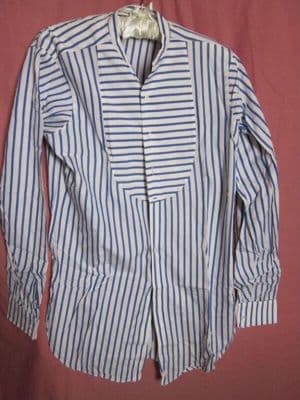
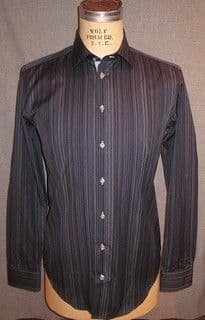
Navy Blue White Striped Cotton Dress Shirt
1970s · 1960s-1970s · British
Designer
John Ericson
Production
handmade
Material
cotton
Culture
British
Movement
Hippie / Counterculture
A men's dress shirt featuring navy blue and white vertical stripes of varying widths. The shirt displays classic tailored construction with a pointed collar, button-front closure, and long sleeves with button cuffs. The striping pattern creates visual interest through alternating narrow and wider bands, with some sections showing clustered thin stripes. The cotton fabric appears crisp and structured, typical of formal shirting. The garment shows traditional English tailoring techniques with precise seaming and professional finishing. The collar is proportioned for tie wear, and the overall silhouette follows conventional menswear standards of the 1960s with a fitted but not slim cut through the torso.
shirtregular fithip length
Connected To
Worn with·necktieWorn with·suit jacketMotif·stripe-band
SHAREDcross-culture
These two shirts reveal how the stripe migrated from Wall Street power play to Savile Row subtlety. The charcoal pinstripe shirt carries the sharp, almost predatory precision of 2000s finance culture—those knife-thin lines designed to slice through boardroom air—while the navy and white striped shirt speaks in the gentler accent of 1970s British tailoring, where stripes were conversational rather than confrontational.
Pull the Thread→
Follow this garment wherever the graph leads