V&A
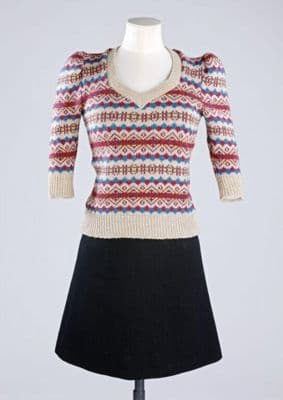
Multi-Coloured Fair Isle Wool Jumper
1970s · 1970s · British
Designer
Bus Stop
Production
ready-to-wear
Material
wool
Culture
British
Movement
Hippie / Counterculture
Influences
Scottish Fair Isle knitting tradition
A fitted wool pullover featuring traditional Fair Isle colorwork in geometric patterns. The garment has a deep V-neckline and three-quarter sleeves with ribbed cuffs. Multiple horizontal bands display diamond motifs and zigzag patterns in rust red, navy blue, brown, and cream against a neutral ground. The body is closely fitted through the torso, typical of 1960s knitwear silhouettes. The ribbed hem sits at the natural waistline. The intricate stranded colorwork technique creates a dense, warm fabric with characteristic Fair Isle patterning that references Scottish knitting traditions while adapted for contemporary 1960s fashion.
sweaterregular fitv-neckhip length
Connected To
Influences·Scottish Fair Isle knitting traditionTechnique·hand-embroideryTechnique·knitting
Pull the Thread→
Follow this garment wherever the graph leads