V&A
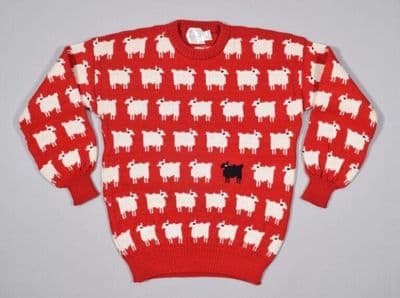
Red Wool Sheep Motif Pullover Sweater
1970s · 1970s · British
Production
ready-to-wear
Material
wool
Culture
British
Movement
Hippie / Counterculture
Influences
British countryside imagery · novelty knitwear trend
A red wool pullover sweater featuring an all-over pattern of white sheep silhouettes arranged in regular rows across the body and sleeves. The sheep are depicted as simple, rounded forms with legs, creating a playful repeating motif against the bright red ground. One black sheep appears among the white ones, creating a visual focal point and referencing the common idiom. The sweater has a classic crew neck construction with ribbed edges at the collar, cuffs, and hem. The knitted fabric appears to be machine-produced with the sheep pattern likely created through intarsia or jacquard knitting techniques. This represents the late 1970s trend toward whimsical, graphic knitwear that emerged as casual fashion became more expressive and playful.
sweaterregular fitcrew neckhip length
Connected To
Movement·Hippie / CountercultureTechnique·knitting
LINEAGEsame era→ directed
Lineage: “British countryside imagery”
Echoes Across Time
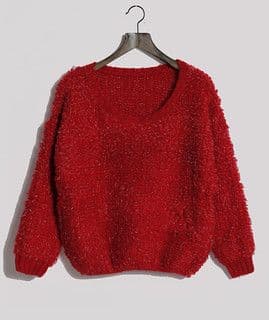
1970s → 2020s · 50yr48%
LINEAGE
That cheeky black sheep lurking among the white flock on the '70s pullover carries the same subversive spirit as the deliberately imperfect, hand-knit texture of the contemporary chunky sweater — both reject the polished perfection that machine knitting could deliver. The earlier piece uses literal narrative (the rebel sheep) while the modern version embeds its rebellion in the deliberately uneven stitches and oversized proportions that mimic amateur craft.
Technique·knitting

2020s → 1970s · 50yr41%
Pull the Thread→
Follow this garment wherever the graph leads