1970s · 1980s · American
Production
mass-produced
Material
cotton-polyester blend
Culture
American
Movement
Punk
Influences
punk rock merchandise · underground music graphics
A white sleeveless t-shirt featuring layered graphic text and imagery in distressed print style. The design includes bold typography reading 'SMELL OF FEMALE' at the top, with additional text including 'CRAMPS' prominently displayed in green lettering. The graphics appear deliberately rough and punk-aesthetic with overlapping elements creating a collage-like composition. Red accents appear throughout the design. The garment has a standard crew neckline and armhole construction typical of casual tank tops. The printing shows intentional distressing and layering effects characteristic of punk rock merchandise from the early 1980s underground music scene.


That red plaid mini skirt peeking out beneath the black moto jacket carries the same rebellious DNA as the distressed band tank's torn typography—both garments weaponize deliberate roughness against polished conformity. The jacket's sharp lapels and aggressive zippers echo the tank's jagged, peeling graphics: punk's visual vocabulary of destruction as decoration, whether through ripped lettering or studded hardware.


Follow this garment wherever the graph leads
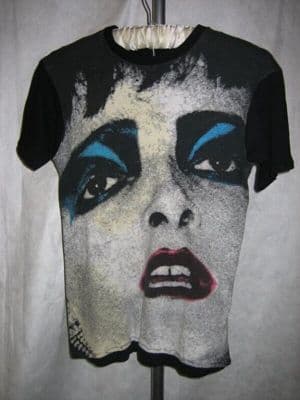
Both shirts weaponize the humble graphic tee as a canvas for rebellion, but they reveal punk's split personality across the Atlantic. The Siouxsie shirt transforms her face into a grotesque mask—that smeared makeup and dead-eyed stare turning beauty into horror through deliberate degradation of the printing process.
That red plaid mini skirt peeking out beneath the black moto jacket carries the same rebellious DNA as the distressed band tank's torn typography—both garments weaponize deliberate roughness against polished conformity. The jacket's sharp lapels and aggressive zippers echo the tank's jagged, peeling graphics: punk's visual vocabulary of destruction as decoration, whether through ripped lettering or studded hardware.
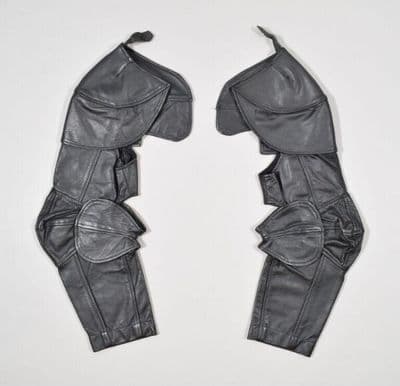
These pieces capture punk's split personality perfectly: the tank's chaotic typography collage—"CRAMPS" bleeding into illegible fragments—represents the movement's DIY, xeroxed aesthetic, while the leather armor translates that same rebellious energy into something more theatrical and protective. The fifteen-year gap between them shows how punk evolved from scrappy American garage culture to Britain's more structured, almost medieval interpretation of outsider identity.