SMITHSONIAN
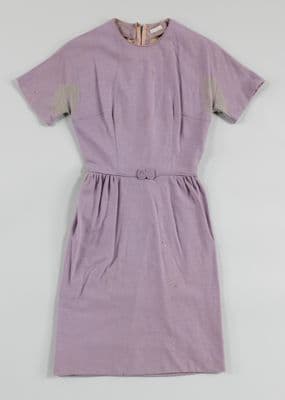
Purple Wool Knit Short Sleeve Shift Dress
1960s · 1960s · American
Production
ready-to-wear
Material
wool knit
Culture
American
Movement
Modernism · Space Age
Influences
1960s mod geometry · Courreges minimalism
A lavender purple wool knit dress featuring a straight, knee-length silhouette characteristic of 1960s modernist design. The garment has short sleeves and a round neckline, with vertical front seaming that creates subtle shaping through the bodice. A fabric belt at the natural waistline creates gentle gathering, adding feminine detail to the otherwise geometric form. The knit construction allows for comfortable movement while maintaining a structured appearance. The dress exemplifies the Space Age era's emphasis on clean lines and synthetic-looking colors, with the lavender hue reflecting the period's fascination with futuristic, non-traditional color palettes. The cream-colored lining visible at the neckline suggests quality construction typical of better ready-to-wear garments of the decade.
dressstraightround neckknee length
Connected To
Movement·ModernismMovement·Space Age
SHAREDsame era · cross-culture · cross-category
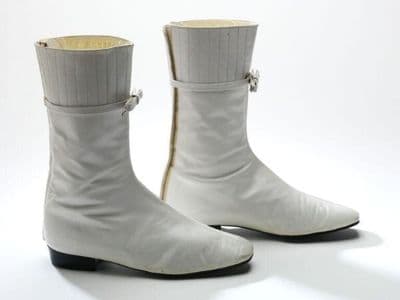
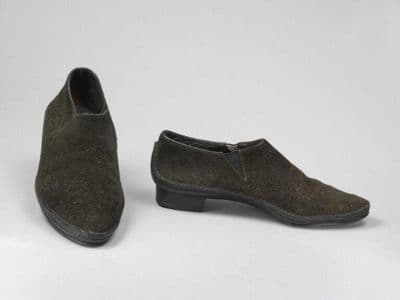
These pieces capture the 1960s obsession with streamlined, almost architectural simplicity—the shoes with their clean slip-on silhouette that eliminates any decorative stitching or lacing fuss, the dress with its geometric shift shape punctuated only by that minimal belt detail.
Pull the Thread→
Follow this garment wherever the graph leads