V&A
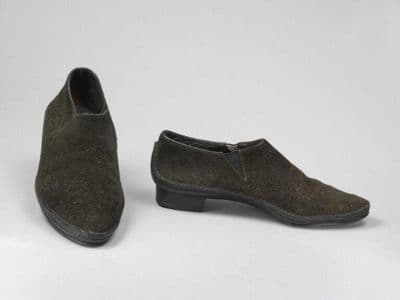
Black Suede Men's Slip-On Oxford Shoes
1960s · 1960s · British
Production
ready-to-wear
Material
suede
Culture
British
Movement
Modernism · Space Age
Influences
modernist architecture · Scandinavian design minimalism
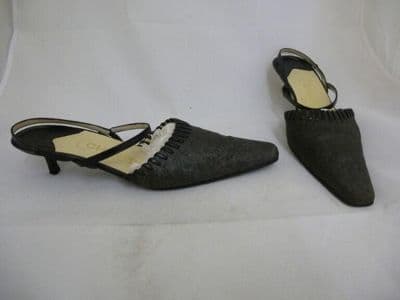
A pair of men's slip-on shoes constructed from dark olive-green suede with black leather trim and soles. The shoes feature a sleek, low-profile silhouette characteristic of early 1960s modernist footwear design. The upper is cut in a simple, geometric shape with minimal seaming and no visible fastenings, creating a streamlined appearance. The toe box is moderately pointed but not exaggerated, reflecting the transitional period between 1950s conservatism and later 1960s experimentation. The heel is low and blocky, providing a stable, masculine foundation. The construction appears machine-stitched with clean, precise edges that emphasize the shoe's architectural quality typical of Space Age design sensibilities.
shoeregular fit
Connected To
Movement·ModernismMovement·Space AgeTechnique·leather-working
SHAREDsame era · cross-culture
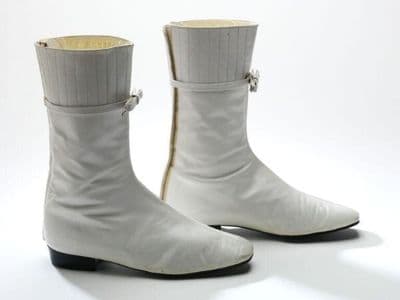
These shoes capture the 1960s obsession with clean, unadorned surfaces—the British oxfords with their seamless suede uppers that flow like molded clay, the French boots with their smooth white leather punctuated only by those precise ribbed cuffs. Both reject traditional shoe construction's fussy details for something more sculptural, but where the oxfords whisper minimalism in forest green, the boots announce space-age optimism in stark white.
Echoes Across Time
Pull the Thread→
Follow this garment wherever the graph leads