SMITHSONIAN
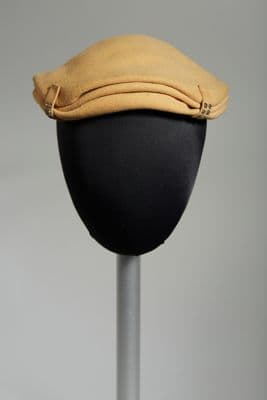
Tan Wool Felt Pleated Beret with Rhinestones
1960s · 1960s · American
Production
ready-to-wear
Material
wool felt
Culture
American
Movement
Modernism · Space Age
Influences
French beret tradition · 1960s geometric modernism
A structured wool felt beret in warm tan color, featuring precise radial pleating that creates geometric segments around the crown. The pleats converge at the center top and are held in place by what appears to be small metallic details or rhinestones at regular intervals along the pleated seams. The beret maintains a classic rounded silhouette with a fitted band that would sit snugly around the head. The construction demonstrates skilled millinery work with clean, sharp pleating that creates both visual interest and structural integrity. The neutral tan color and geometric pleating reflect 1960s modernist design sensibilities while maintaining the timeless elegance of traditional French beret styling.
hat
Connected To
Movement·ModernismMovement·Space Age
SHAREDsame era · cross-culture · cross-category
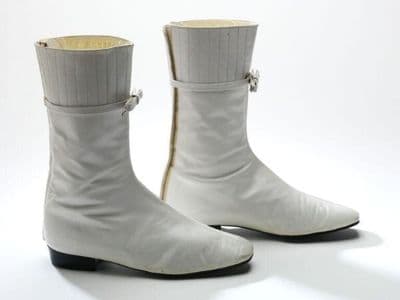
Both pieces pulse with that crisp 1960s geometry that made fashion feel suddenly architectural—the beret's knife-sharp pleats radiating from center like a modernist sunburst, the boots' ribbed cuffs creating clean horizontal bands that could have been lifted from a Courrèges sketch. The tan felt and white leather might occupy different hemispheres of the body, but they speak the same language of precision-cut minimalism, where every fold and seam feels calculated rather than organic.
Text66%
Image70%
Entity36%
Movement·ModernismMovement·Space Age
SHAREDsame era · cross-culture · cross-category
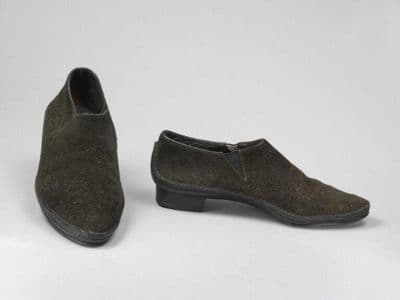
These pieces capture the 1960s' obsession with streamlined, almost architectural form—the oxford's severe, seamless suede upper echoes the beret's smooth dome punctuated by precise pleats. Both reject traditional embellishment in favor of pure geometry: the shoe eliminates lacing hardware for a clean slip-on silhouette, while the beret abandons typical military details for sculptural folds that radiate from its crown like a modernist building's facade.
Influences·French beret tradition
SHARED20 years · cross-culture
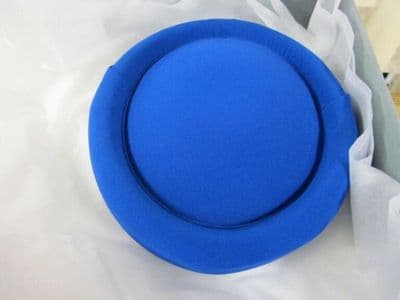
These two berets reveal how the French military's utilitarian headwear became a canvas for mid-century millinery ambition. The earlier tan felt version maintains the beret's essential soft crown but adds theatrical pleating and rhinestone punctuation—pure American optimism applied to Parisian practicality.
Text69%
Movement·ModernismMovement·Space Age
SHAREDsame era · cross-culture · cross-category
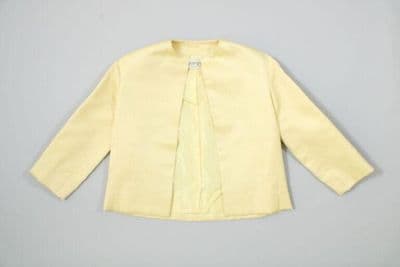
Both pieces capture that particular 1960s obsession with sculptural minimalism — the jacket's clean, collarless geometry and the beret's architectural pleating strip away any fussy details in favor of pure form. The pale yellow silk reads almost like a laboratory specimen of mid-century restraint, while the beret's precise radial folds create the kind of engineered headpiece that could have been designed for a space mission.
Pull the Thread→
Follow this garment wherever the graph leads