V&A
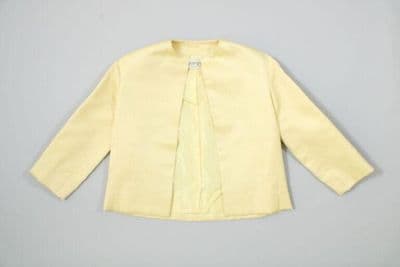
Pale Yellow Wild Silk Cropped Evening Jacket
1960s · 1960s · French
Designer
Yves Saint Laurent
Production
haute couture
Material
wild silk
Culture
French
Movement
Space Age · Modernism
Influences
Space Age minimalism · Mondrian geometric blocks
A pale yellow wild silk evening jacket with a distinctly modern, geometric silhouette characteristic of 1960s Space Age design. The garment features a collarless neckline with a simple round opening and front button closure running down the center. The sleeves are three-quarter length, ending just below the elbow, and the jacket's body is cut in a boxy, straight-lined shape that falls to approximately waist level. The construction appears clean and minimal, with no visible surface embellishment or decorative elements. The wild silk fabric has a subtle textural quality with a matte finish that enhances the garment's architectural form. This piece exemplifies Yves Saint Laurent's modernist approach to evening wear, emphasizing clean lines and simplified construction over traditional feminine curves.
jacketstraightcollarlessabove-the-hip
Connected To
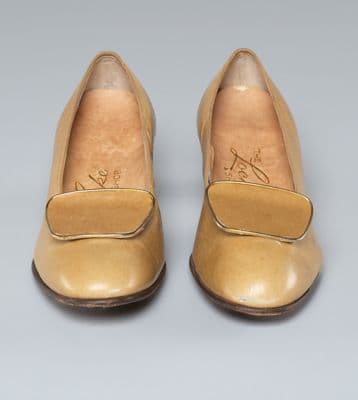
Influences·Space Age minimalismMovement·Space Age
SHAREDsame era · cross-culture · cross-category
Both pieces pulse with that clean, unadorned confidence that defined mid-'60s Space Age dressing — the jacket's boxy, collarless silhouette and the pumps' geometric toe caps speak the same visual language of streamlined modernism. The pale yellow silk and burnished tan synthetic share that slightly artificial, future-forward palette that designers like Courrèges and Cardin were pushing, a deliberate step away from nature's colors toward something more laboratory-precise.
Pull the Thread→
Follow this garment wherever the graph leads