SMITHSONIAN
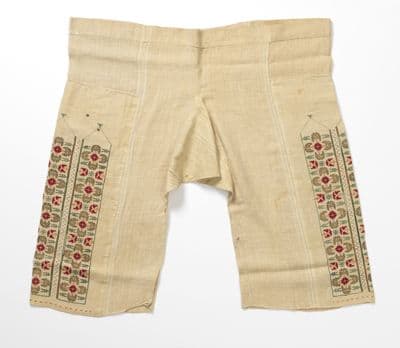
Cream Linen Wide-Leg Trousers with Silk Embroidery
Baroque · 1700s · Greek
Production
handmade
Material
linen with silk embroidery
Culture
Greek
Influences
Ottoman textile traditions · Byzantine decorative patterns
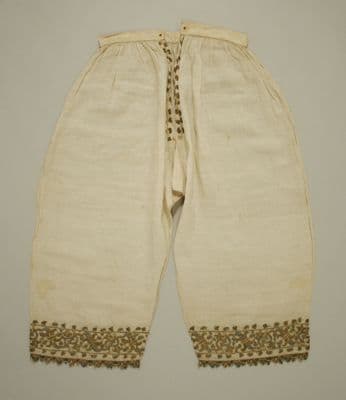
Wide-legged linen trousers with a high waistband and drawstring closure at the center front. The natural linen fabric appears to be a medium-weight plain weave. Decorative silk embroidery runs in vertical bands down the outer seams of each leg, featuring geometric patterns and stylized floral motifs in red, green, and brown threads. The embroidery work shows traditional folk techniques with repeating border designs. The construction includes flat-fell seams and reinforced stress points. The wide, straight-cut legs would have provided comfort and ease of movement for daily activities in 18th-century Greek traditional dress.
pantswide legknee length
Connected To
67%
Influences·Ottoman textile traditionsTechnique·hand-embroidery
SHARED100 years · cross-culture · cross-category
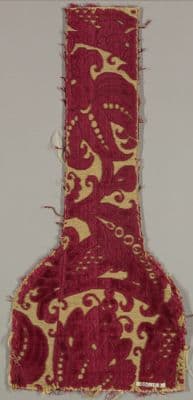
The crimson velvet's sinuous gold arabesques and the linen trousers' geometric floral borders both speak Ottoman—that empire's textile vocabulary traveled trade routes to dress English courtiers and Greek islanders alike. Where the velvet fragment whispers of palace luxury with its dense, serpentine motifs crawling across deep pile, the trousers shout practicality, their neat rows of stylized blooms marching down sturdy linen legs like a farmer's orderly garden.
67%
Influences·Ottoman textile traditionsTechnique·hand-embroidery
SHARED40 years · cross-culture · cross-category
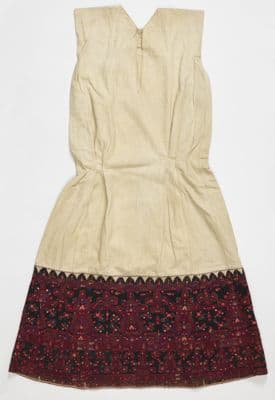
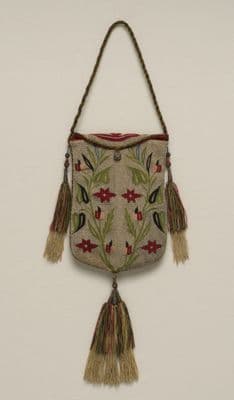
These two pieces reveal how Ottoman embroidery traditions rippled across the Eastern Mediterranean, translating the same visual vocabulary of stylized florals and geometric borders from Syrian luxury accessories to Greek everyday dress. The purse's delicate vine motifs climbing up sage cotton find their echo in the trouser's bold red flowers marching down cream linen legs—both using silk thread to elevate humble base fabrics into something precious.
Influences·Ottoman textile traditions
SHARED180 years · cross-culture · cross-category
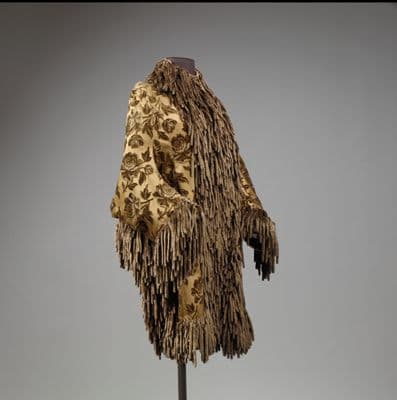
Both garments bear the unmistakable fingerprint of Ottoman textile mastery, though centuries and continents separate them. The Victorian cape's cascading silk fringe and that particular burnished gold colorway echo the luxurious passementerie that Ottoman craftsmen perfected, while the Greek trousers' geometric embroidered borders follow the same mathematical precision of Turkish decorative arts.
Worn with·chemiseTechnique·hand-embroidery
LINEAGE210 years · cross-culture→ directed
Lineage: “Byzantine decorative patterns”
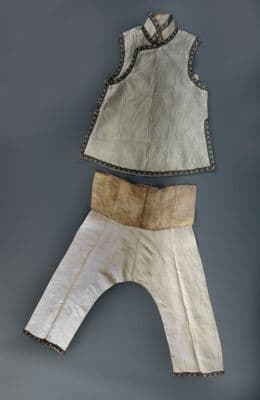
These linen undergarments, separated by two centuries and the breadth of the Mediterranean, share the same compulsion to beautify what was meant to be hidden. The Italian Renaissance drawers deploy their geometric brown trim like a careful architect's border, while the Greek Baroque breeches explode into floral abundance—roses and geometric patterns cascading down the legs in silk threads that catch light where no one was supposed to look.
Pull the Thread→
Follow this garment wherever the graph leads