THE MET
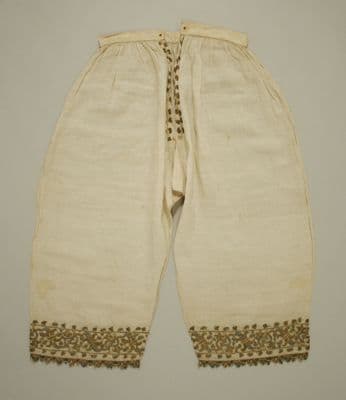
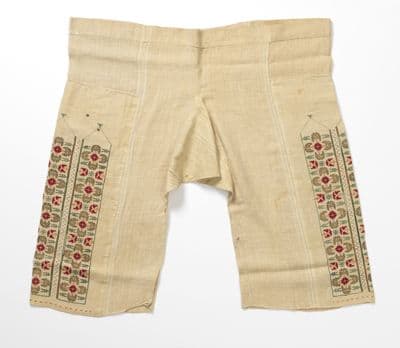
Cream Linen Drawers with Brown Decorative Trim
Italian Renaissance · Italian
Production
handmade
Material
linen
Culture
Italian
These Renaissance-era linen drawers feature a loose, gathered construction with a drawstring waist closure that laces through multiple eyelets. The garment extends to mid-calf length and is cut with generous fullness for ease of movement. The most distinctive feature is the decorative brown trim applied to the hem edges, featuring a repeating geometric or floral pattern that appears to be either embroidered or applied braid work. The natural linen fabric shows the characteristic texture and weight typical of period undergarments. The construction demonstrates the practical approach to intimate apparel during the Italian Renaissance, where such garments served both hygienic and modesty functions beneath outer clothing.
pantswide legbelow the knee
Connected To
64%
Worn with·chemiseWorn with·doubletTechnique·hand-embroidery
SHARED180 years · cross-culture · cross-category
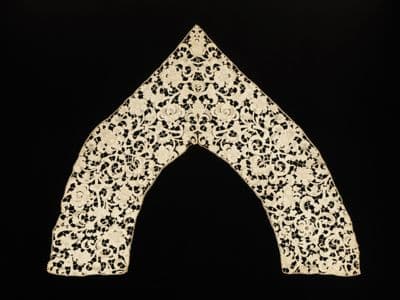
The delicate cutwork embroidery that transforms the falling band collar into a constellation of tiny apertures finds its echo in the geometric bobbin lace edging the Renaissance drawers — both garments wielding the same arsenal of negative space and intricate handwork to elevate humble linen into something precious.
Text73%
Image69%
Worn with·chemiseTechnique·hand-embroidery
LINEAGE210 years · cross-culture→ directed
Lineage: “Byzantine decorative patterns”
These linen undergarments, separated by two centuries and the breadth of the Mediterranean, share the same compulsion to beautify what was meant to be hidden. The Italian Renaissance drawers deploy their geometric brown trim like a careful architect's border, while the Greek Baroque breeches explode into floral abundance—roses and geometric patterns cascading down the legs in silk threads that catch light where no one was supposed to look.
Worn with·hose
SHARED90 years · cross-culture · cross-category
Text51%
Image62%
41%
LINEAGE210 years · cross-culture · cross-category→ directed
Lineage: “Italian Renaissance grotesque ornament”
Text67%
Image72%
Pull the Thread→
Follow this garment wherever the graph leads