THE MET
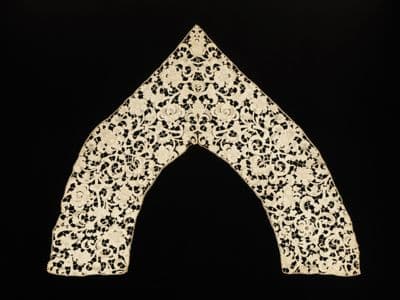
Cream Linen Falling Band Collar with Cutwork Embroidery
Baroque · 1670s · British
Production
handmade
Material
linen with cutwork embroidery
Culture
British
Influences
Italian cutwork tradition · Protestant plain style
A triangular falling band collar constructed from fine linen with elaborate cutwork embroidery throughout. The collar features intricate openwork patterns created by cutting away fabric and reinforcing edges with buttonhole stitching, forming delicate floral and geometric motifs. The pointed shape extends down the chest in the characteristic late 17th-century style that replaced the earlier wide ruffs. The cutwork technique creates negative space patterns against the linen ground, demonstrating the skilled needlework typical of Baroque period accessories. This type of collar would have been worn by both men and women of the upper classes, tied at the neck and lying flat over the shoulders and chest of a doublet or bodice.
scarf
Connected To
64%
Worn with·chemiseWorn with·doubletTechnique·hand-embroidery
SHARED180 years · cross-culture · cross-category
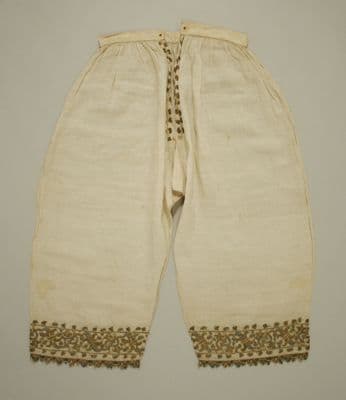
The delicate cutwork embroidery that transforms the falling band collar into a constellation of tiny apertures finds its echo in the geometric bobbin lace edging the Renaissance drawers — both garments wielding the same arsenal of negative space and intricate handwork to elevate humble linen into something precious.
Text73%
Image69%
55%
Technique·cutworkTechnique·hand-embroidery
SHARED180 years · cross-category
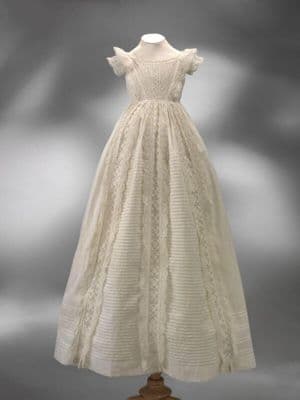
The delicate cutwork embroidery that transforms this 17th-century falling band collar into lace-like filigree finds its descendant in the Victorian christening gown's intricate whitework, where the same technique of cutting away fabric and reinforcing edges with dense stitching creates those ethereal floral motifs cascading down the bodice.
16%
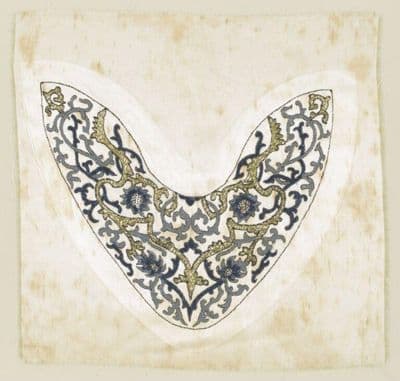
VISUAL ECHO280 years · cross-category
Text50%
Image83%
Entity
Pull the Thread→
Follow this garment wherever the graph leads