THE MET
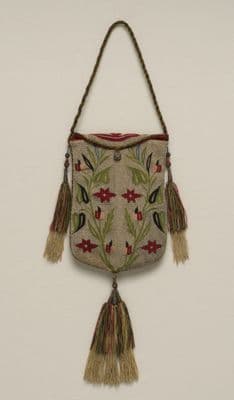
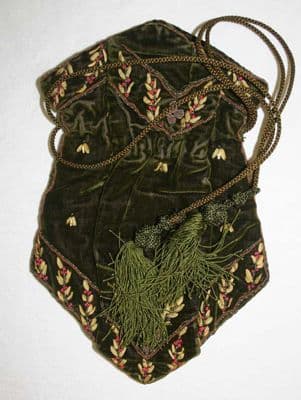
Sage Green Cotton Drawstring Purse with Silk Embroidery
Baroque · 18th-19th century · Syrian
Production
handmade
Material
silk embroidered cotton
Culture
Syrian
Influences
Ottoman textile traditions · Islamic floral motifs
A drawstring purse with a rounded pouch body constructed from cotton ground fabric densely embroidered with silk threads in a sophisticated floral pattern. The design features stylized tulips and carnations in burgundy red against a sage green background, executed in satin stitch embroidery typical of Ottoman textile traditions. The purse opens with a drawstring mechanism at the top, finished with a burgundy silk band. Multiple silk tassels in coordinating colors hang from the bottom and sides, creating movement and luxury. A braided cord handle allows for carrying. The embroidery technique shows precise geometric placement of botanical motifs, reflecting the high level of craftsmanship in 17th-century Syrian textile production.
bag/wallet
Connected To
67%
Influences·Ottoman textile traditionsTechnique·hand-embroidery
SHARED40 years · cross-culture · cross-category
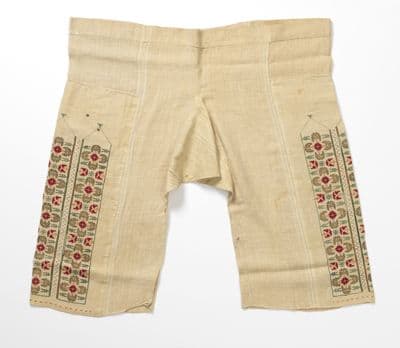
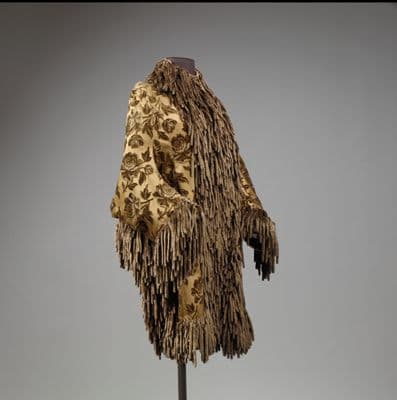
These two pieces reveal how Ottoman embroidery traditions rippled across the Eastern Mediterranean, translating the same visual vocabulary of stylized florals and geometric borders from Syrian luxury accessories to Greek everyday dress. The purse's delicate vine motifs climbing up sage cotton find their echo in the trouser's bold red flowers marching down cream linen legs—both using silk thread to elevate humble base fabrics into something precious.
Text56%
Image71%
Entity40%
Influences·Ottoman textile traditions
SHARED220 years · cross-culture · cross-category
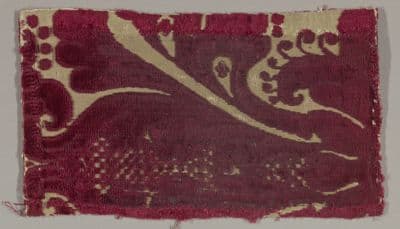
These two pieces trace the long arc of Ottoman textile influence across continents and centuries. The Victorian cape's cascade of silk fringe and that particular burnished gold tone echo the luxurious passementerie that American women coveted from "exotic" Eastern sources, while the Syrian purse shows the actual wellspring—those intricate silk tassels and the way embroidered florals dance across the surface with an almost tactile richness.
45%
LINEAGE60 years · cross-culture · cross-category→ directed
Lineage: “Islamic floral motifs”
Text63%
Image70%
36%
Technique·hand-embroidery
VISUAL ECHO160 years · cross-culture
Text76%
Image
Pull the Thread→
Follow this garment wherever the graph leads