SMITHSONIAN
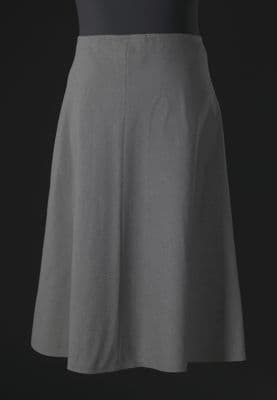
Charcoal Grey Pinstriped Wool A-Line Skirt
1980s · 1990s · American
Designer
Arthur McGee
Production
ready-to-wear
Material
wool
Culture
American
Movement
Power Dressing
Influences
1940s A-line silhouette
A knee-length A-line skirt in charcoal grey wool with subtle vertical pinstripes. The garment features a fitted waistband that sits at the natural waist, creating a smooth silhouette that gradually flares to a moderate A-line shape ending at mid-calf. The wool fabric appears to have a smooth, tailored finish with fine pinstripes running vertically down the length. The construction shows clean lines typical of 1990s professional wear, with what appears to be a side or back closure. The skirt represents the era's emphasis on polished, workplace-appropriate clothing that balanced femininity with professional authority, reflecting the decade's corporate dress codes and the influence of designers creating sophisticated separates for working women.
skirta-linemidi
Connected To
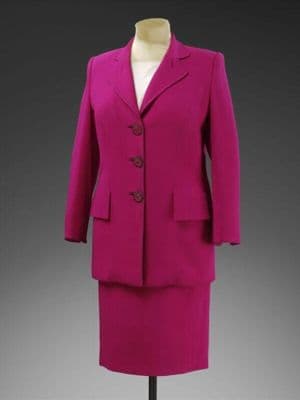
Movement·Power DressingWorn with·blazer
SHARED10 years · cross-culture · cross-category
These two pieces trace the evolution of 1980s power dressing from its sharp-shouldered peak to its softer denouement. The fuchsia suit's militant tailoring—those peaked lapels, structured shoulders, and regimental button stance—represents the decade's early armor-like approach to women's professional dress, while the charcoal A-line skirt shows how the movement eventually relaxed into something more wearable, trading geometric severity for gentle flare.
Pull the Thread→
Follow this garment wherever the graph leads