SMITHSONIAN
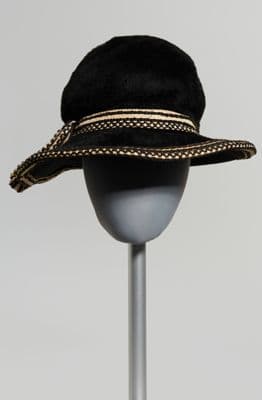
Black Fur Felt Cloche Hat with Woven Trim
Roaring Twenties / Art Deco · 1960s · American
Production
ready-to-wear
Material
fur felt
Culture
American
Influences
1920s cloche silhouette
A black fur felt cloche hat with a fitted crown that sits close to the head and a narrow brim that curves slightly downward. The hat features a distinctive woven trim band in gold and cream geometric patterns that circles the crown just above the brim line. A small decorative bow made from the same patterned trim is positioned at the front left side of the hat. The felt appears to have a smooth, dense texture typical of quality millinery work. The overall silhouette reflects the streamlined, geometric aesthetic of 1960s fashion, with clean lines and minimal ornamentation beyond the contrasting trim work.
hattight fit
Connected To
Influences·1920s cloche silhouette
SHARED30 years · cross-culture
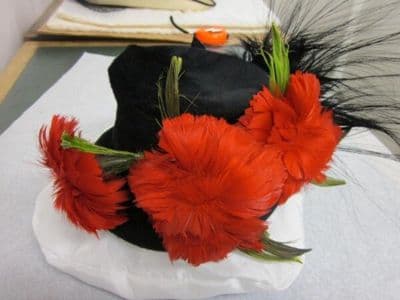
These two black cloches trace the evolution of millinery excess across the economic divide of early 20th-century America. The 1920s original, with its crisp geometric braid echoing Art Deco's clean lines, represents the era's optimistic embrace of machine-age precision, while the Depression-era descendant compensates for material scarcity with theatrical abundance—those explosive orange feathers and gray plumes creating drama that money couldn't buy.
Text74%
Image81%
Entity28%
Influences·1920s cloche silhouette
SHAREDsame era · cross-culture
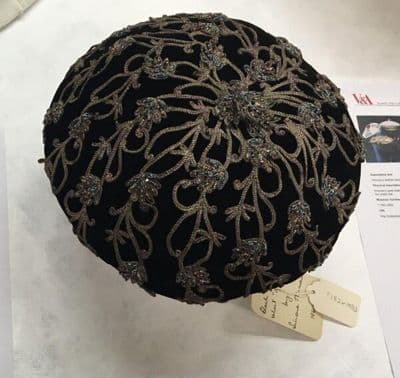
These two hats trace the journey of 1920s rebellion from Jazz Age pragmatism to bohemian fantasy. The cloche's crisp geometric trim and close-fitting crown epitomized the decade's sharp-edged modernity—a hat for women who bobbed their hair and drove cars. The Apache hat borrows that same skull-hugging silhouette but drowns it in romantic excess, its velvet surface crawling with gold embroidered vines that would have horrified any self-respecting flapper.
Technique·machine-weaving
VISUAL ECHO30 years
Text73%
Image88%
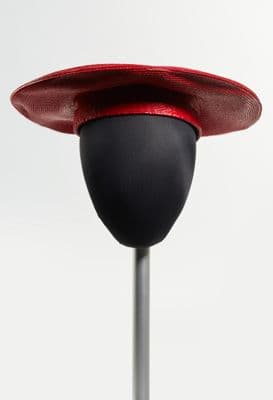
Technique·machine-weaving
VISUAL ECHO30 years
Text71%
Image86%
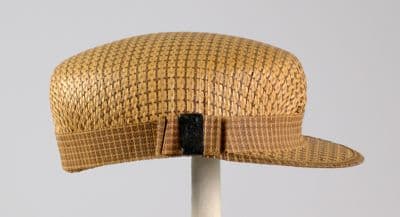
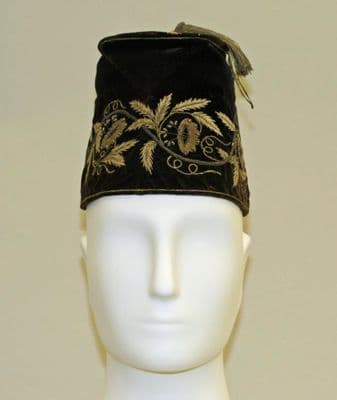
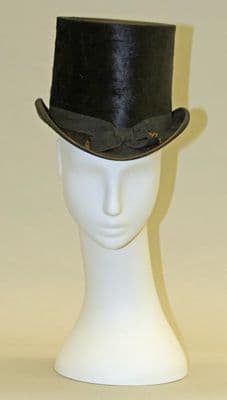
Pull the Thread→
Follow this garment wherever the graph leads