SMITHSONIAN
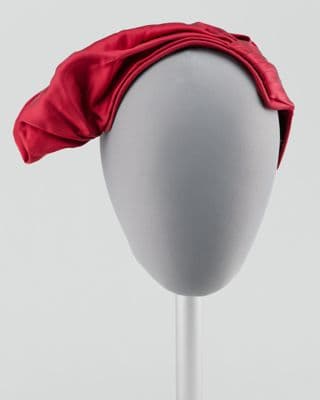
Deep Red Satin Draped Turban Hat
Wartime / Utility Fashion · 1940s · American
Production
handmade
Material
synthetic satin
Culture
American
Influences
1940s turban styling · wartime fabric conservation
A sculptural turban-style hat constructed from lustrous synthetic satin in deep red. The fabric is expertly draped and pleated to create voluminous folds that sweep dramatically across the crown, with one end extending into a graceful tail. The construction demonstrates sophisticated draping techniques, with the satin gathered and twisted to maintain structural integrity while creating fluid movement. The hat sits close to the head with the draped fabric forming an asymmetrical silhouette. This style reflects wartime millinery innovation, utilizing synthetic materials and fabric-conserving construction methods while maintaining elegance through skillful manipulation of the textile.
hat
Connected To
Influences·wartime fabric conservation
LINEAGEsame era→ directed
Lineage: “1940s turban styling”
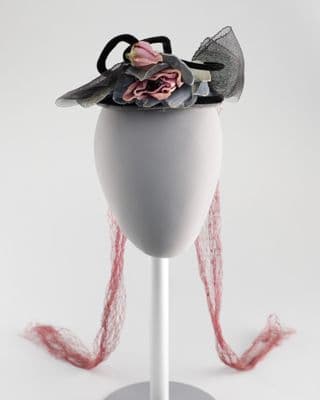
These two hats reveal how wartime rationing birthed an entire vocabulary of ingenious head-wrapping. The black velvet cap with its trailing pink veils shows the 1940s knack for making a little fabric go far—that wispy veil suggests mourning while the floral appliqué insists on prettiness, a very American refusal to be entirely somber.
Text75%
Image83%
Entity49%
Influences·1940s turban styling
SHARED40 years · cross-culture
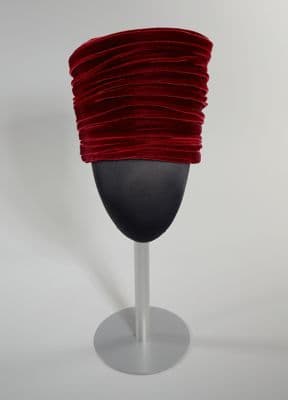
These two red headpieces reveal how the 1940s turban became a template that traveled through time and across communities. The wartime turban's fluid satin draping—practical yet glamorous, born from fabric rationing and factory work—morphs forty years later into the velveteen hat's architectural pleating, where those soft gathers have been disciplined into sharp, stacked ridges that create a towering crown.
Text
Technique·draping
LINEAGE50 years · cross-culture · cross-category→ directed
Lineage: “1940s turban revival”
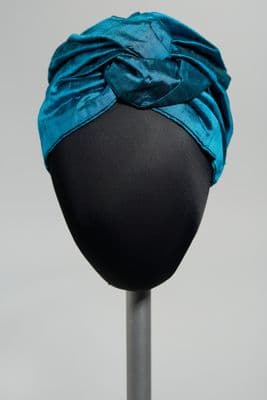
The wartime turban's crisp satin folds and the '90s silk dupioni wrap both master the art of controlled draping, but fifty years apart they tell opposite stories about covering one's head. Where the red synthetic satin creates sharp, architectural pleats that speak to 1940s factory efficiency and making-do glamour, the teal silk's softer gathers flow with the luxurious weight of deliberate choice.
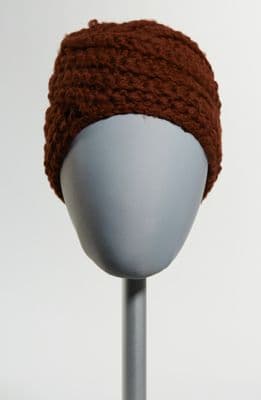
LINEAGE20 years · cross-culture→ directed
Lineage: “traditional turban wrapping”
Text86%
Image79%
Echoes Across Time
Wartime / Utility Fashion → 1980s · 40yr67%
SHARED
These two red headpieces reveal how the 1940s turban became a template that traveled through time and across communities. The wartime turban's fluid satin draping—practical yet glamorous, born from fabric rationing and factory work—morphs forty years later into the velveteen hat's architectural pleating, where those soft gathers have been disciplined into sharp, stacked ridges that create a towering crown.
Influences·1940s turban styling
Wartime / Utility Fashion → 1990s · 50yr50%
Pull the Thread→
Follow this garment wherever the graph leads