SMITHSONIAN
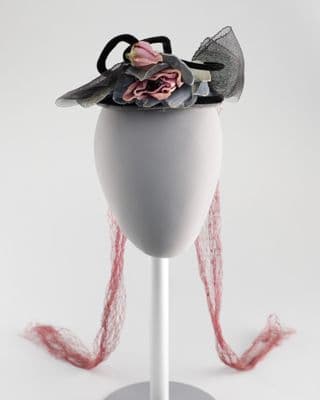
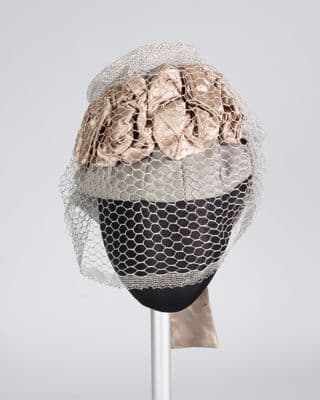
Black Velvet Skull Cap with Floral Veil
Wartime / Utility Fashion · 1940s · American
Production
handmade
Material
synthetic velvet
Culture
American
Influences
1940s rationing millinery · wartime fabric conservation
A close-fitting black velvet skull cap designed to hug the head's contours, typical of 1940s millinery during fabric rationing. The hat features clustered fabric roses in muted dusty rose tones positioned asymmetrically, creating visual interest without excess material. A structured black bow adds geometric contrast to the organic flower forms. Gray netting extends as face veiling, a practical and fashionable element that provided modesty and sophistication. The construction demonstrates wartime ingenuity—achieving elegance through strategic placement of minimal decorative elements rather than lavish embellishment, reflecting both material constraints and the era's preference for neat, controlled silhouettes.
hattight fit
Connected To
Influences·wartime fabric conservation
LINEAGEsame era→ directed
Lineage: “1940s turban styling”
These two hats reveal how wartime rationing birthed an entire vocabulary of ingenious head-wrapping. The black velvet cap with its trailing pink veils shows the 1940s knack for making a little fabric go far—that wispy veil suggests mourning while the floral appliqué insists on prettiness, a very American refusal to be entirely somber.
Text75%
Image83%
Entity49%

Technique·applique
LINEAGEsame era→ directed
Lineage: “wartime fabric conservation”
These two hats reveal how wartime rationing forced milliners to become magicians of suggestion. The cream synthetic straw hat makes do with artificial flowers clustered at the brim's edge—a gentle nod to abundance when real silk blooms were impossible—while the black velvet cap doubles down on drama through sheer necessity, its wispy pink veiling creating maximum impact from minimal yardage.
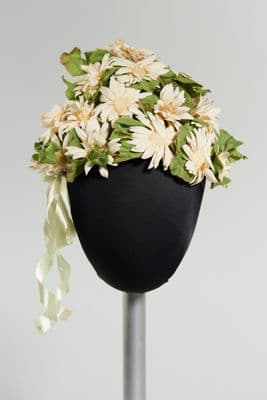
Technique·applique
SHARED30 years
Text78%
Image86%
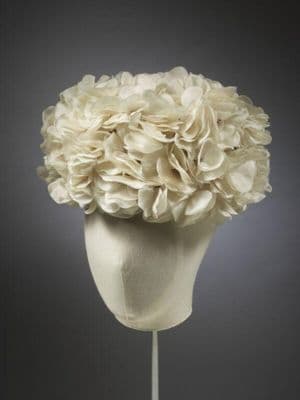
Technique·applique
SHARED20 years · cross-culture
Text71%
Image84%
Pull the Thread→
Follow this garment wherever the graph leads