Deconstructivism · 2000s · British
Production
one-of-a-kind
Material
mixed media textile
Culture
British
Movement
Deconstructivism
Influences
Japanese origami folding · 1980s power shoulder
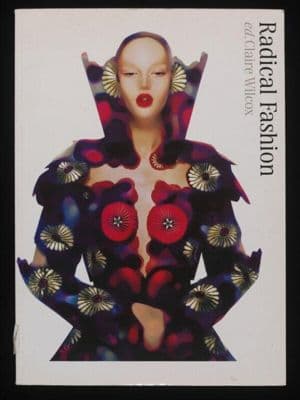
This avant-garde jacket features dramatic angular shoulder extensions that create wing-like projections from the silhouette. The garment displays bold floral motifs in red and burgundy against a black base, with metallic gold accents throughout the pattern. The construction appears highly structured with sharp geometric lines defining the collar and lapels. The jacket's silhouette is fitted through the torso with an exaggerated shoulder line that extends well beyond the natural shoulder point. The floral pattern appears to be either appliqued or printed, creating dimensional surface interest. This piece exemplifies the experimental fashion of the early 2000s, where designers pushed boundaries between clothing and sculptural art, creating garments that challenged traditional notions of wearability and form.
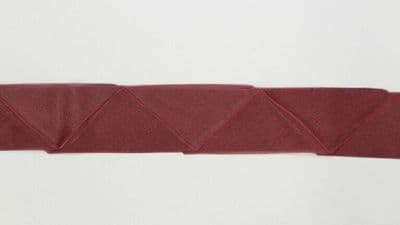
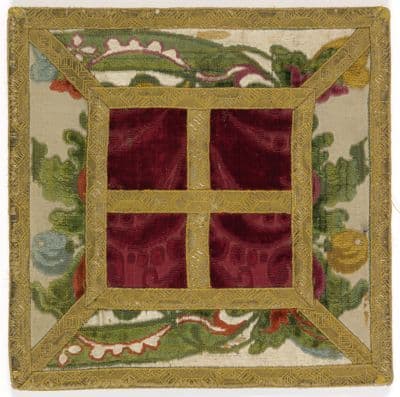
That burgundy scarf's razor-sharp chevron pleats and the jacket's origami-wing shoulders both spring from the same Japanese folding obsession that swept through fashion in the '90s. The scarf shows the technique in its purest form—geometric precision carved into gauze—while the jacket explodes those same angular principles into full theatrical armor, complete with structured points that could cut glass.
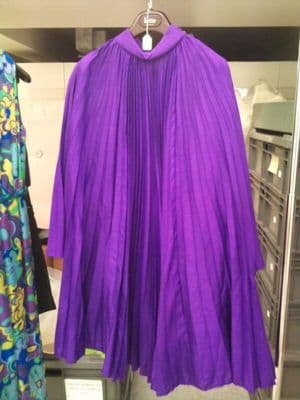
That avant-garde jacket with its sharp-angled lapels jutting like geometric wings shares DNA with the purple tent dress's accordion pleats — both garments treat fabric as architecture, folding it into sculptural forms that expand beyond the body's natural silhouette. The jacket's origami-inspired construction, with its precise creases creating dramatic shoulder projections, echoes the same Japanese folding principles that give the 1960s dress its voluminous, pleated structure.


Follow this garment wherever the graph leads
That avant-garde jacket with its sharp-angled lapels jutting like geometric wings shares DNA with the purple tent dress's accordion pleats — both garments treat fabric as architecture, folding it into sculptural forms that expand beyond the body's natural silhouette. The jacket's origami-inspired construction, with its precise creases creating dramatic shoulder projections, echoes the same Japanese folding principles that give the 1960s dress its voluminous, pleated structure.
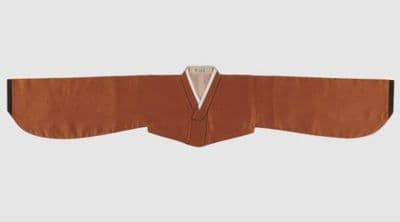
The black jacket's theatrical wing shoulders and the rust bolero's dramatically extended sleeves both spring from the 1980s obsession with architectural shoulders, but they've traveled in opposite directions. Where the bolero achieves its power through pure geometric sweep—those kimono-inspired sleeves stretching like a perfect horizontal line—the wing jacket fractures that same shoulder emphasis into something more sinister, turning floral motifs into armor plating.
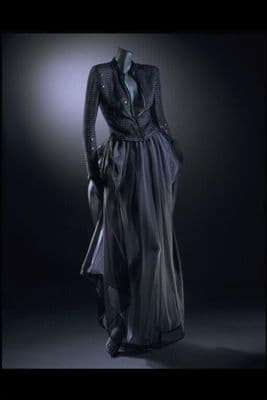
Both pieces weaponize the shoulder as a site of architectural ambition, but where the first dissolves power into gossamer theater—those billowing organza sleeves suggesting a vampire's cape more than boardroom armor—the second crystallizes it into something more predatory. The wing-like extensions bristling with embroidered blooms read like shoulder pads that have evolved past human proportions, turning the wearer into a magnificent, slightly menacing hybrid creature.