V&A
Charcoal Gray Pleated Polyester Wrap Dress
1990s · 2000s · Japanese
Designer
Issey Miyake
Production
ready-to-wear
Material
pleated polyester
Culture
Japanese
Movement
Japanese avant-garde fashion · Minimalism
Influences
Japanese furoshiki wrapping · origami folding techniques
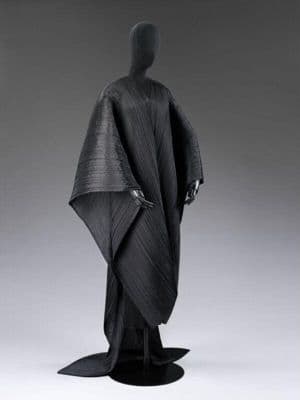
This garment showcases Issey Miyake's signature pleating technique, featuring fine vertical pleats that run continuously across the entire surface of the polyester fabric. The dress is constructed as a single rectangular piece that wraps around the body, creating an asymmetrical silhouette with one side extending longer than the other. The pleats maintain their structure while allowing the fabric to drape fluidly, creating subtle shadows and texture variations across the charcoal gray surface. The wrap construction requires no fastenings, relying on the fabric's weight and the wearer's manipulation to secure the garment. This represents Miyake's revolutionary approach to garment construction, where technology and traditional Japanese wrapping concepts merge to create clothing that adapts to the body's movement.
dressloose fitround neckfloor length
Connected To
Influences·Japanese furoshiki wrappingMovement·Minimalism
SHARED10 years · cross-culture · cross-category
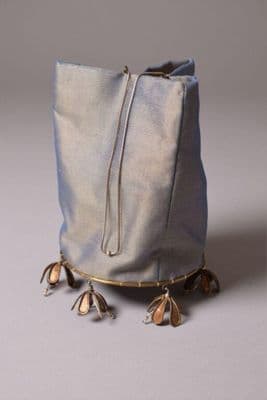
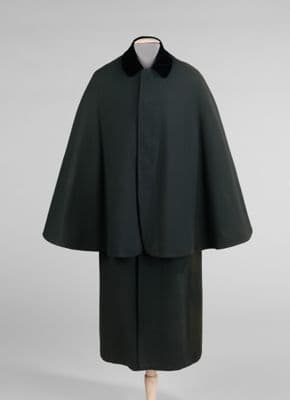
That pale silk pouch with its leather tassels and the severe pleated wrap both spring from the same 1990s obsession with Japanese minimalism, but they landed in completely different worlds. The bag borrows the ancient furoshiki tradition of cloth wrapping—that gentle gathering at the top, the way fabric becomes both container and ornament—while the dress takes Miyake's architectural pleating and turns it into something almost monastic in its severity.
Echoes Across Time
Pull the Thread→
Follow this garment wherever the graph leads