V&A
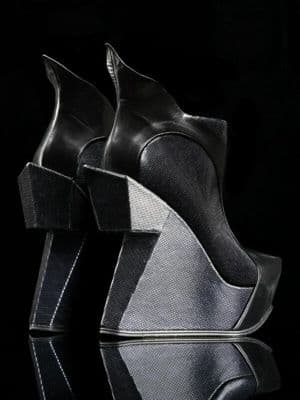
Black Leather Architectural Platform Boots with Metallic Accents
2000s · 2010s · Portuguese
Production
artisan-craft
Material
leather and polyurethane
Culture
Portuguese
Movement
Conceptual Fashion · Indie Sleaze
Influences
architectural brutalism · industrial design
These sculptural platform boots feature an extreme architectural silhouette with curved, blade-like heel extensions that create a dramatic angular profile. The boots appear to be constructed from black leather with metallic silver or chrome detailing, combining organic curves with geometric precision. The platform sole is substantial, creating significant height elevation, while the upper portion wraps around the ankle and lower calf. The heel structure defies conventional footwear engineering, extending backward and upward in sweeping arcs that suggest both industrial design and organic forms. The surface treatment alternates between matte black leather and reflective metallic elements, emphasizing the sculptural quality of the construction.
shoe
Connected To
64%
Movement·Conceptual FashionFunction·avant-gardeMotif·abstract-organic
SHAREDsame era · cross-culture · cross-category
62%
Movement·Conceptual FashionFunction·avant-gardeMotif·abstract-organic
SHARED20 years · cross-culture · cross-category
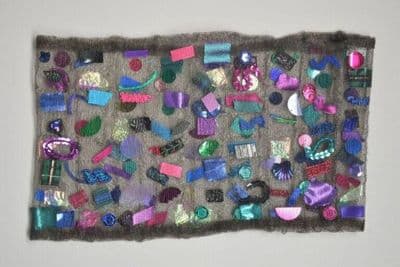
These pieces share fashion's turn toward the alien and otherworldly in the 1990s and 2000s, when designers began treating the body as a site for speculative evolution. The cowl's gossamer mesh scattered with jewel-like fragments suggests some future organism's membrane, while those sculptural boots with their curved, fin-like platforms could be prosthetics for navigating an aquatic world.
59%
Movement·Conceptual FashionFunction·avant-garde
SHAREDsame era · cross-culture · cross-category
These two pieces capture the moment when fashion turned into pure concept, abandoning any pretense of everyday wearability. The Portuguese platforms transform feet into sculptural impossibilities—those knife-blade heels and architectural curves make walking secondary to making a statement about the body as art object.
51%
Movement·Indie SleazeTechnique·leather-working
SHAREDsame era · cross-culture · cross-category
Text69%
Pull the Thread→
Follow this garment wherever the graph leads