SMITHSONIAN
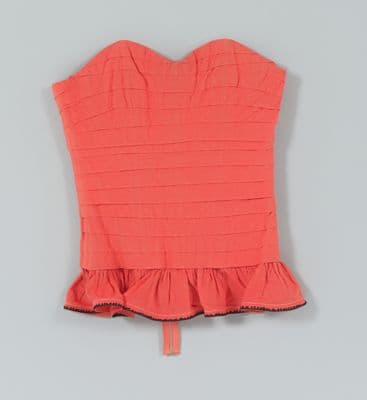
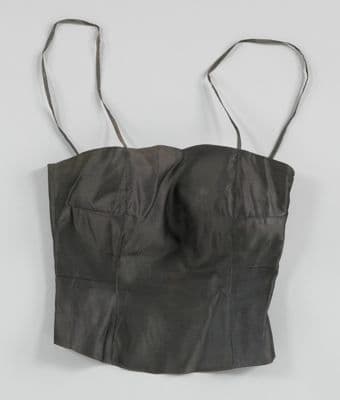
Olive Green Silk Organza Bustier Corset Top
1950s · 1950s · American
Production
handmade
Material
silk organza
Culture
American
Movement
New Look · New Look / Post-War
Influences
Victorian corsetry · 1950s New Look foundation garments
A structured bustier-style corset top in olive-toned silk organza with thin adjustable shoulder straps. The garment features a straight-across bust line with subtle seaming that creates shape and support through the bodice. The fabric appears crisp and lightweight, characteristic of silk organza's body and sheen. Internal boning or structured construction is evident from the way the garment maintains its form. The shoulder straps are narrow and appear to be made from the same fabric or coordinating material. This piece represents the fitted, structured undergarments that supported the full-skirted silhouettes popular in 1950s evening wear, designed to create the desired hourglass figure beneath formal gowns.
top/t-shirt/sweatshirttight fitstraight acrossabove-the-hip
Connected To
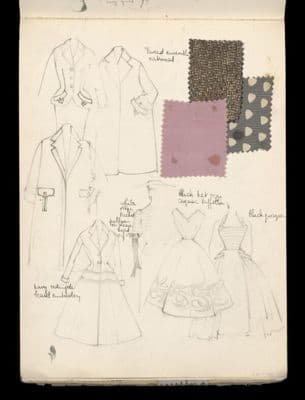
Movement·New LookMovement·New Look / Post-WarWorn with·petticoat
Echoes Across Time
1950s → 1990s · 40yr62%
SHARED
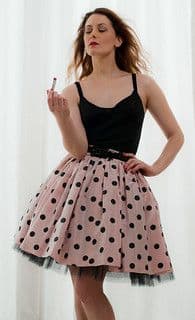
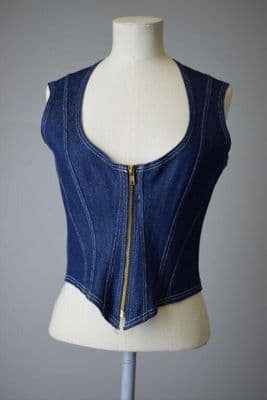
These two pieces trace the stubborn persistence of the corset's grip on fashion, even as it shape-shifts through decades and social upheavals. The 1950s bustier maintains the Victorian blueprint with its rigid boning and sweetheart neckline, but translates it into whisper-thin silk organza with spaghetti straps—a genteel nod to structure that could pass for evening wear rather than undergarment.
Influences·Victorian corsetry
1950s → 2000s · 50yr62%
Pull the Thread→
Follow this garment wherever the graph leads