V&A
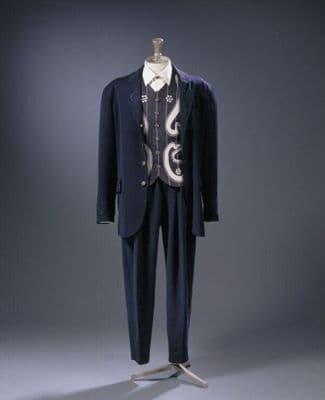
Navy Blue Cotton Twill Straight Leg Trousers
1990s · 1990s · British
Designer
Workers for Freedom
Production
ready-to-wear
Material
cotton twill
Culture
British
Movement
Minimalism
Influences
Edwardian formal wear · Arts and Crafts decorative motifs
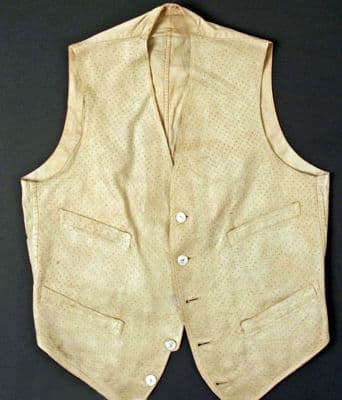
A navy blue three-piece suit featuring a single-breasted jacket with notched lapels, matching trousers, and a distinctive waistcoat with white decorative scrollwork embroidery or appliqué. The jacket appears to have a relaxed, unstructured silhouette typical of early 1990s menswear, moving away from the sharp-shouldered power dressing of the 1980s. The waistcoat displays ornate white curved motifs against the dark fabric, creating a formal yet artistic aesthetic. The trousers appear to have a straight leg cut with a moderate rise. This ensemble reflects the period's interest in combining traditional tailoring with decorative elements, characteristic of British alternative fashion designers who sought to reinvent classic menswear.
pantsstraightfloor length
Connected To
Movement·MinimalismWorn with·dress shirtFunction·formal-evening
Pull the Thread→
Follow this garment wherever the graph leads