1990s · 1990s · Italian
Designer
Sonnicci
Production
ready-to-wear
Material
blue denim
Culture
Italian
Movement
Minimalism · Grunge
Influences
menswear shirting · workwear utility
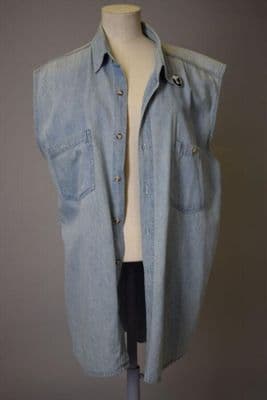
An oversized sleeveless denim shirt constructed as a long tunic or shirt dress. The garment features a classic shirt collar, button-front closure with metal snap buttons, and dual chest pockets with flap closures. The denim appears to be a medium-weight cotton in a light blue wash with subtle fading. The silhouette is deliberately oversized and boxy, extending well past the hips in a straight-cut hemline. The armholes are generously cut, creating a relaxed, unstructured fit typical of 1990s minimalist casual wear. The construction follows traditional shirt-making techniques but scaled up for an intentionally loose, androgynous silhouette that reflects the decade's preference for understated, comfortable dressing.
Follow this garment wherever the graph leads

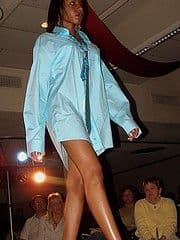
The crisp white poplin tunic and the faded denim shirt dress are separated by three decades but united by their theft from the men's closet—both lift the oversized proportions and utilitarian pockets of masculine shirting and make them quietly subversive.
Both pieces mine the same vein of borrowed-from-the-boys shirting, but the denim sleeveless dress from the '90s commits fully to the masculine gesture—those oversized armholes and dropped shoulders read like someone raided their boyfriend's closet and took scissors to a work shirt. The contemporary white shirt plays it safer, keeping the sleeves and softening the appropriation with a more fitted silhouette that whispers rather than shouts its menswear DNA.
Both garments strip the classic men's shirt down to its essential geometry, but they arrive at that minimalism through opposite routes. The contemporary white poplin shirt achieves its androgynous power through pure proportion—those dramatically oversized sleeves and elongated torso that swallow the wearer's frame—while the '90s denim dress gets there by subtraction, removing sleeves entirely and letting the shirt's natural length become a tunic.
Both dresses raid the men's closet with the confidence of someone who knows exactly what they're stealing. The 1990s denim sleeveless version strips a work shirt down to its utilitarian bones—those twin chest pockets and clean button placket speaking the language of honest labor—while the 2010s poplin dress inflates the same borrowed silhouette into something almost architectural, its oversized proportions turning masculine shirting into a statement about space and power.