2020s · 2020s · Western
Production
ready-to-wear
Material
cotton blend
Culture
Western
Movement
Minimalism · Quiet Luxury
Influences
menswear shirting · minimalist design
A loose-fitting white cotton blend shirt with a classic button-front closure and collar. The garment features an oversized silhouette that extends past the hips, with sleeves that appear to be rolled or pushed up to three-quarter length. The shirt has a relaxed, unstructured drape typical of contemporary casual wear. The fabric appears lightweight and breathable, with a clean, minimalist aesthetic. The garment is styled open over what appears to be an undergarment, demonstrating the layering approach common in modern casual dressing. The overall construction suggests machine manufacturing with standard shirt details including a pointed collar and button placket.
Both garments speak the same language of studied nonchalance, where the most expensive thing you can buy is the appearance of not trying. The puffer's matte charcoal quilting and the shirt's deliberately oversized proportions share that particular brand of stealth wealth that emerged in the 2010s — luxury that whispers rather than shouts, where a $400 jacket looks like something you grabbed from a gas station and a $200 shirt mimics your boyfriend's cast-offs.
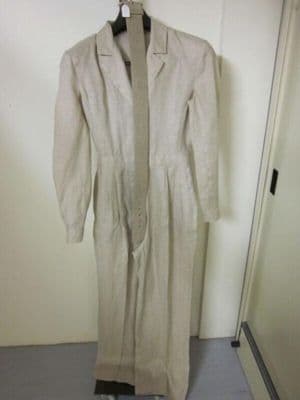
These two pieces trace minimalism's evolution from the cerebral to the casual—the '90s jumpsuit's monastic severity giving way to the breezy shirt's effortless drape. Both work in that pale, neutral palette that whispers rather than shouts, but where the jumpsuit's structured tailoring and utilitarian belt demanded commitment, today's shirt floats over denim shorts like minimalism learned to exhale.


Follow this garment wherever the graph leads
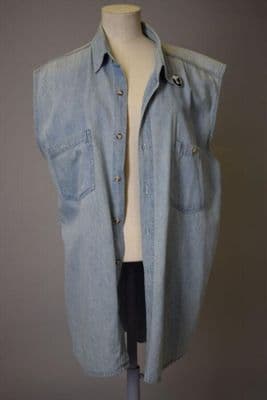
Both pieces mine the same vein of borrowed-from-the-boys shirting, but the denim sleeveless dress from the '90s commits fully to the masculine gesture—those oversized armholes and dropped shoulders read like someone raided their boyfriend's closet and took scissors to a work shirt. The contemporary white shirt plays it safer, keeping the sleeves and softening the appropriation with a more fitted silhouette that whispers rather than shouts its menswear DNA.
These two pieces trace minimalism's evolution from the cerebral to the casual—the '90s jumpsuit's monastic severity giving way to the breezy shirt's effortless drape. Both work in that pale, neutral palette that whispers rather than shouts, but where the jumpsuit's structured tailoring and utilitarian belt demanded commitment, today's shirt floats over denim shorts like minimalism learned to exhale.
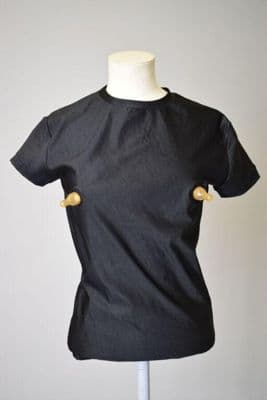
The white button-front shirt's breezy, oversized silhouette and the black fitted tee represent two poles of minimalist dressing—one borrowed from menswear's relaxed codes, the other sculpted to the female form like a second skin. What bridges these thirty years is their shared rejection of ornament: no logos, no patterns, no fuss, just the purity of cut and fabric doing all the work.
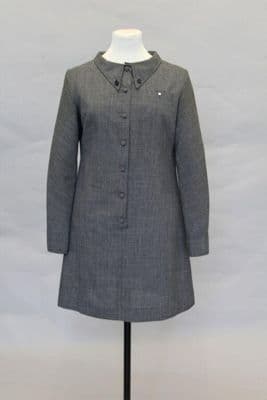
The crisp white shirt's oversized proportions and relaxed button-front echo the 1970s shirt dress's borrowed-from-the-boys DNA, both lifting details from men's wardrobes but softening the masculine codes in opposite directions. Where the vintage dress maintains its structured, tailored silhouette in that boardroom-ready Prince of Wales check, the contemporary shirt goes loose and languid, turning menswear precision into something more like pajama ease.