2020s · 2020s · Western
Production
ready-to-wear
Material
cotton poplin
Culture
Western
Movement
Minimalism · Quiet Luxury
Influences
menswear shirting · minimalist design
An oversized white cotton button-down shirt worn as a standalone garment. The shirt features a classic pointed collar, full-length sleeves rolled to three-quarter length, and a relaxed, boxy silhouette that extends to mid-thigh. The fabric appears to be a crisp cotton poplin with a smooth finish. The shirt is worn unbuttoned at the neck and styled in the contemporary oversized manner typical of quiet luxury aesthetics, where premium basics are elevated through proportion and fit rather than obvious branding or embellishment. The clean lines and minimalist styling reflect the 2020s trend toward understated luxury and effortless sophistication.
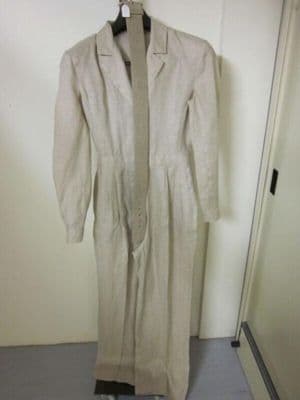
These two pieces speak the same minimalist language across four decades, both weaponizing the power of crisp, pale neutrals and clean lines. The oversized shirt's deliberately slouchy proportions and rolled sleeves echo the jumpsuit's relaxed tailoring and utilitarian belt, proving that minimalism's genius lies not in severity but in making effortless look intentional.

These two pieces speak the same minimalist language across four decades, both weaponizing the power of crisp, pale neutrals and clean lines. The oversized shirt's deliberately slouchy proportions and rolled sleeves echo the jumpsuit's relaxed tailoring and utilitarian belt, proving that minimalism's genius lies not in severity but in making effortless look intentional.


Follow this garment wherever the graph leads
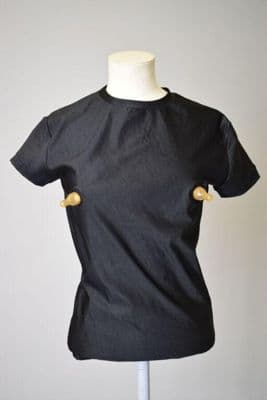
The oversized white shirt's deliberate slouch and the black tee's second-skin fit represent two poles of the same minimalist impulse — the idea that perfect simplicity requires no decoration beyond proportion. Where the '90s lycra tee achieved its modernist purity through technological stretch and body-consciousness, the contemporary shirt finds it in architectural volume and the crisp geometry of cotton poplin.
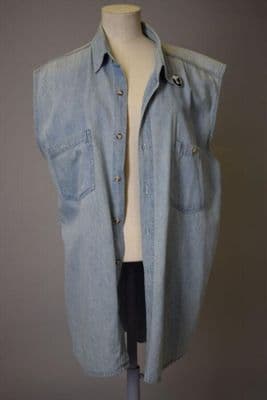
Both garments strip the classic men's shirt down to its essential geometry, but they arrive at that minimalism through opposite routes. The contemporary white poplin shirt achieves its androgynous power through pure proportion—those dramatically oversized sleeves and elongated torso that swallow the wearer's frame—while the '90s denim dress gets there by subtraction, removing sleeves entirely and letting the shirt's natural length become a tunic.
The oversized white shirt's deliberate slouch and the black halter's clean A-line both speak the same minimalist language, just with different punctuation marks. Where the shirt achieves its effect through generous proportions and the casual rebellion of an unbuttoned cuff, the dress gets there via the stark geometry of its halter neckline and the way that black fabric falls in an uninterrupted line.
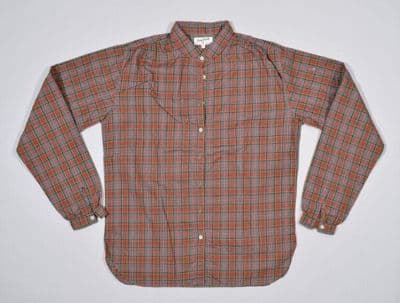
Both shirts mine menswear's closet for that borrowed-from-the-boys appeal, but they tell different stories about feminine appropriation. The oversized white poplin drowns its wearer in deliberate excess—sleeves that could house small animals, a silhouette that turns the classic button-down into a minimalist statement about proportion and negative space.