THE MET
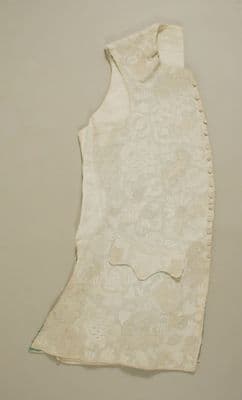
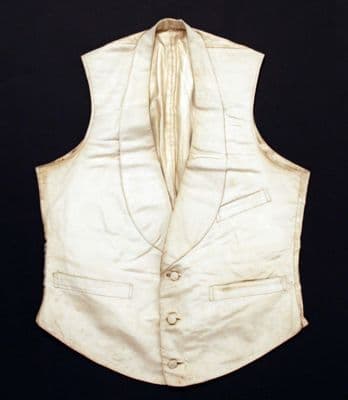
Cream Silk High-Waisted Formal Waistcoat
Empire / Regency · 1810s · American
Production
handmade
Material
silk
Culture
American
Influences
Regency high waistline · Neoclassical simplicity
A cream-colored silk waistcoat displaying the characteristic high-waisted silhouette of the Regency period. The garment features a deep V-shaped neckline with wide lapels that curve gracefully around the chest. Four covered buttons run down the center front in a vertical line, creating the typical Empire waistline placement. The waistcoat is cut without sleeves, showing armscye openings finished with bound edges. The silk fabric appears to have a subtle sheen and smooth hand typical of period formal menswear. The back likely features adjustable ties or buckles for fit customization, standard in early 19th-century waistcoat construction.
vesttight fithip length
Connected To
Worn with·breechesWorn with·cravat
SHAREDsame era · cross-culture · cross-category
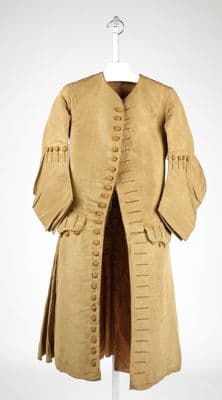
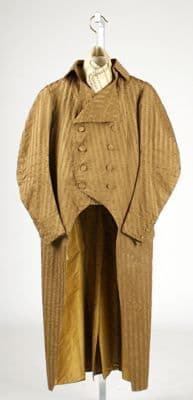
These two pieces reveal how Empire-era menswear balanced comfort and formality through strategic construction. The quilted silk overcoat achieves its sculptural bulk through diamond-pattern stitching that traps warmth while maintaining the period's requisite breadth of shoulder, while the cream waistcoat uses high-buttoning and precise tailoring to create that signature high-waisted silhouette that made men look like elegant exclamation points.
Text81%
Image83%
Entity31%
Worn with·dress coat
SHAREDsame era · cross-culture · cross-category
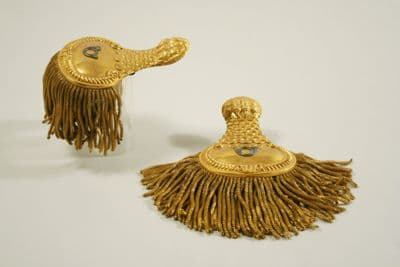
These pieces reveal how Napoleonic-era formality operated on different registers of the same visual language. The epaulets' cascade of golden bullion fringe and the waistcoat's high-buttoned torso both sculpt the male silhouette into that distinctly Empire period shape — broad shoulders tapering to a cinched waist — but one announces military rank while the other whispers civilian refinement.
Text
Worn with·cravat
SHARED30 years · cross-category
Text64%
Image76%
Worn with·breeches
SHARED200 years · cross-culture
Text75%
Image75%
Pull the Thread→
Follow this garment wherever the graph leads