THE MET
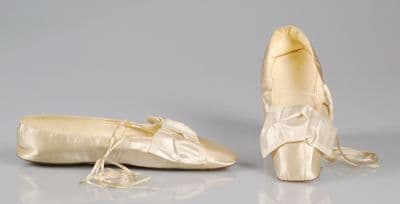
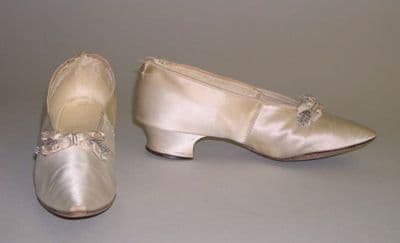
Pale Pink Silk Satin Pointed Evening Shoes
Fin de Siecle / Gibson Girl · 1890s · American
Production
handmade
Material
silk satin
Culture
American
Influences
Gibson Girl fashion · Victorian pointed toe
A pair of pointed-toe evening shoes in pale pink silk satin with low curved heels characteristic of 1890s formal footwear. The shoes feature decorative buckles or ornamental elements at the vamp, typical of late Victorian evening shoe design. The pointed toe silhouette reflects the fashionable foot shape of the Gibson Girl era, while the modest heel height maintains the period's preference for elegant but practical evening footwear. The silk satin material indicates these were luxury items for formal occasions, with the lustrous surface treatment creating the refined appearance expected of upper-class evening wear during the fin de siècle period.
shoe
Connected To
Influences·Victorian pointed toeWorn with·evening gownWorn with·stockingsTechnique·leather-workingFunction·court-formal
SHARED10 years · cross-culture
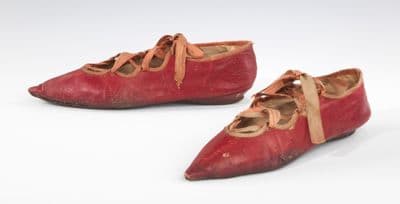
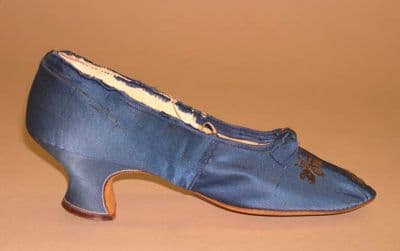
These fin de siècle slippers reveal how the pointed toe became the universal language of evening elegance across continents. The French navy pair's dramatic curve and rosette detail speaks to Second Empire theatricality, while the American pale pink shoes ten years later show how that same sharp point was refined into something more restrained, trading the bow for delicate buckled straps.
Text
Worn with·evening gownWorn with·stockings
SHARED20 years · cross-culture
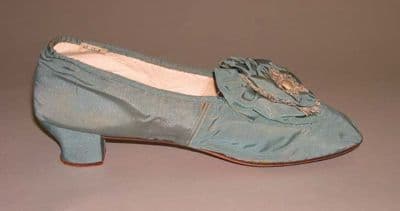
These silk slippers reveal how the Victorian obsession with decorative excess slowly gave way to sleeker modernist impulses. The sage green pair's gathered rosette and ruched fabric speak to the 1870s love of surface ornamentation—every inch must be embellished, draped, or manipulated into something more complex than nature intended.
Worn with·evening gownWorn with·stockings
SHARED10 years · cross-culture
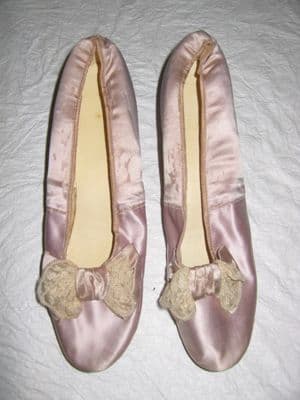
These silk satin slippers, separated by a decade and an ocean, reveal how the Victorian obsession with dainty feet persisted even as hemlines began their slow creep upward. The earlier French pair clings to the slipper tradition with its low-cut vamp and delicate bow trim, while the American shoes push toward modernity with their higher-cut throat and more structured pointed toe—a hint that women were about to start walking differently.
Worn with·evening gownTechnique·leather-workingFunction·court-formal
SHARED20 years · cross-culture · cross-category
Pull the Thread→
Follow this garment wherever the graph leads