THE MET
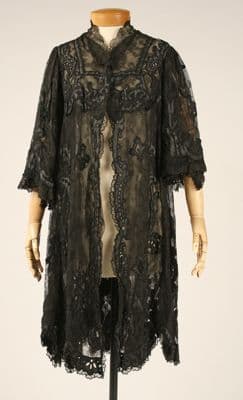
Black Lace Evening Duster Coat
Belle Epoque · 1900s-1910s · French
Production
ready-to-wear
Material
black lace over silk
Culture
French
Movement
Aesthetic Movement
Influences
Victorian mourning wear · Oriental kimono silhouette
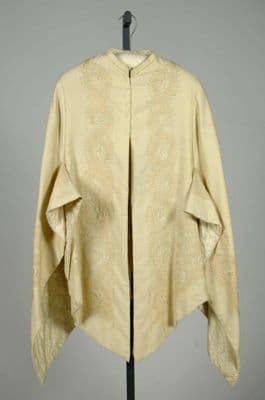
A full-length black lace coat featuring an intricate floral pattern throughout the semi-sheer fabric. The garment displays a loose, flowing silhouette with wide three-quarter sleeves that taper toward the wrists. The coat opens in front without visible closures, designed to drape elegantly over evening wear. The lace appears to be machine-made with dense botanical motifs creating varying degrees of opacity. The hemline features scalloped lace edging that extends in irregular points. The high neckline and overall coverage reflect Belle Epoque modesty requirements while the delicate lace construction demonstrates the era's fascination with elaborate textile techniques and layered dressing for formal occasions.
coatloose fithigh neckmidi
Connected To
Worn with·corsetWorn with·petticoatTechnique·lacework
Echoes Across Time
Belle Epoque → Victorian Early / Crinoline · 40yr55%
SHARED
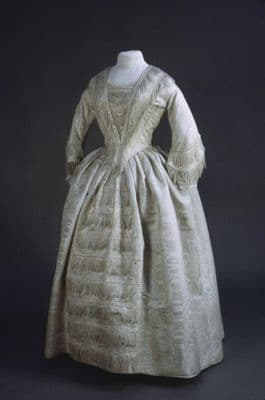
These two garments reveal how French lacemaking evolved from structural necessity to pure seduction across the late 19th century. The earlier ivory wedding dress uses lace as precious punctuation — delicate trim that frames and defines the silk's architectural lines — while the Belle Époque duster transforms lace into the entire narrative, a gossamer second skin that suggests rather than conceals.
Worn with·corsetWorn with·petticoatTechnique·lacework
Pull the Thread→
Follow this garment wherever the graph leads