1990s · 2020s · Western
Production
ready-to-wear
Material
cotton
Culture
Western
Movement
Minimalism
Influences
menswear shirting · androgynous dressing
An oversized cotton button-down shirt in a neutral beige tone, worn as a dress-length garment. The shirt features a classic collar, front button placket, and long sleeves that are rolled up to three-quarter length. The silhouette is deliberately oversized and boxy, falling mid-thigh when worn as a standalone piece. The fabric appears to be a lightweight cotton with a smooth finish. This styling approach of wearing an oversized men's shirt as a dress exemplifies 1990s minimalist fashion's emphasis on androgynous silhouettes, neutral colors, and the repurposing of basic wardrobe staples into statement pieces through proportion and styling rather than decoration.
These two shirts reveal how the borrowed-from-the-boys aesthetic shape-shifts across decades while keeping its essential DNA intact. The '70s check carries that era's obsession with geometric precision—notice how the grid sits tight and disciplined across the torso, while the '90s beige version loosens everything up with dropped shoulders and a deliberately sloppy, oversized fit that swallows the wearer whole.

These two shirts reveal how the borrowed-from-the-boys aesthetic shape-shifts across decades while keeping its essential DNA intact. The '70s check carries that era's obsession with geometric precision—notice how the grid sits tight and disciplined across the torso, while the '90s beige version loosens everything up with dropped shoulders and a deliberately sloppy, oversized fit that swallows the wearer whole.


Follow this garment wherever the graph leads
The oversized beige shirt and the grey Prince of Wales check dress are separated by two decades but united by their raid on the men's wardrobe—both lift the crisp collar, button placket, and structured shoulders that signaled serious business in masculine tailoring.
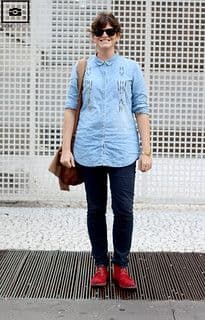
Both shirts raid the men's closet with that same strategic looseness—the chambray's rolled sleeves and the beige shirt's deliberately oversized proportions both weaponize masculine tailoring codes for feminine ease. What separates them isn't just two decades, but intent: the 1990s version carries that era's grunge-inflected rebellion against fitted femininity, while the 2010s chambray reads more like calculated casual chic, styled with dark jeans that anchor its boyfriend-shirt drift.
These two pieces share the same studied nonchalance that defines minimalist dressing—both rely on neutral tones and relaxed silhouettes that suggest effortlessness while being anything but accidental. The tank's ribbed texture and the shirt's soft drape create different paths to the same destination: that coveted look of borrowed-from-someone-cooler ease.
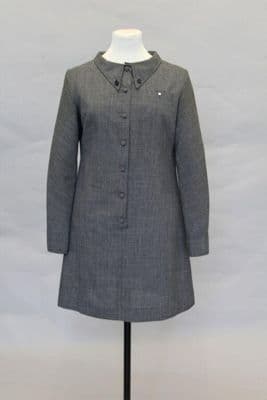
The oversized beige shirt and the grey Prince of Wales check dress are separated by two decades but united by their raid on the men's wardrobe—both lift the crisp collar, button placket, and structured shoulders that signaled serious business in masculine tailoring.