1970s · 1970s · British
Production
ready-to-wear
Material
polyester
Culture
British
Movement
Hippie / Counterculture
Influences
menswear shirting · 1960s shift dress
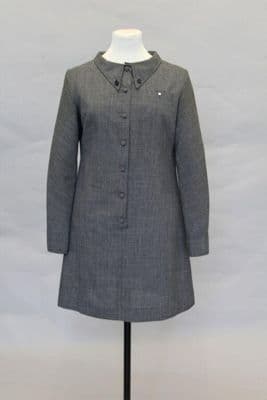
A knee-length shirt dress in grey Prince of Wales check polyester featuring a straight A-line silhouette. The dress has a pointed collar, full-length sleeves, and a center-front button placket extending from neck to hem. The fabric displays the classic Glen plaid pattern with its distinctive windowpane check in varying shades of grey. The construction appears machine-sewn with clean, tailored lines typical of early 1970s ready-to-wear. The dress hangs straight from the shoulders without waist definition, reflecting the shift toward more relaxed, unstructured silhouettes that emerged in the late 1960s and continued into the 1970s.
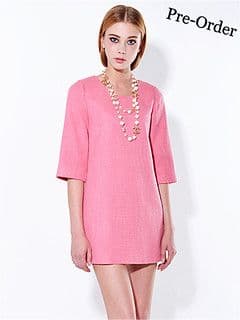
Both dresses trace their lineage to the 1960s shift's revolutionary simplicity, but they've traveled different paths to get there. The pink dress channels Courreges-era optimism with its jeweled neckline and abbreviated hemline, while the grey shirt dress speaks to British pragmatism with its button-front utility and longer proportions.
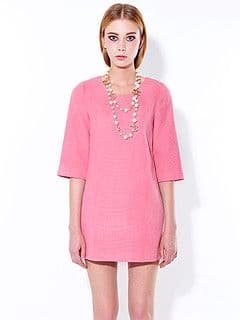

Both dresses trace their lineage to the 1960s shift's revolutionary simplicity, but they've traveled different paths to get there. The pink dress channels Courreges-era optimism with its jeweled neckline and abbreviated hemline, while the grey shirt dress speaks to British pragmatism with its button-front utility and longer proportions.


Follow this garment wherever the graph leads
The coral tunic's deep V-neck and three-quarter sleeves echo the grey dress's shirt-collar and button-front closure — both are riffs on the 1960s shift that stripped away waist definition for a clean, geometric line. Where the earlier dress commits fully to menswear borrowing with its Prince of Wales check and crisp collar, the pink version softens the concept, trading tailored precision for bohemian ease with that plunging neckline and relaxed linen drape.
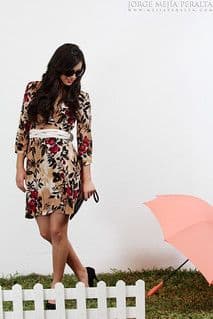
These two dresses reveal how the 1960s shift keeps shape-shifting through decades, but with completely different personalities. The grey polyester number from the '70s holds tight to the mod original's clean geometry — that structured collar, button-front precision, and A-line that stops exactly where Twiggy's would have. The 2010s floral dress takes the same basic silhouette but dissolves all the crispness into something dreamy and bohemian, trading mod minimalism for romantic excess.
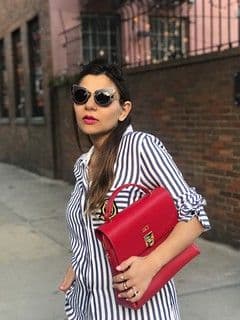
These two shirt dresses trace the long arc of borrowing from the boys' club, but they steal from different floors of the menswear department. The 2010s striped dress raids the casual weekend wardrobe—those breezy oversized proportions and nautical stripes that whisper "borrowed boyfriend shirt"—while the 1970s grey number lifts straight from the boardroom, complete with that Prince of Wales check and tailored collar that means business.
The coral tunic's deep V-neck and three-quarter sleeves echo the grey dress's shirt-collar and button-front closure — both are riffs on the 1960s shift that stripped away waist definition for a clean, geometric line. Where the earlier dress commits fully to menswear borrowing with its Prince of Wales check and crisp collar, the pink version softens the concept, trading tailored precision for bohemian ease with that plunging neckline and relaxed linen drape.