
FASHIONPEDIA
Black Faux Leather Fit and Flare Mini Dress
1980s · 2020s · Western
Production
ready-to-wear
Material
faux leather
Culture
Western
Movement
Power Dressing
Influences
1950s fit-and-flare silhouette
A short black dress featuring a fitted bodice with short sleeves and a flared mini skirt that falls mid-thigh. The garment appears to be constructed from faux leather with a smooth, matte finish that creates subtle light reflection. The silhouette follows the classic fit-and-flare formula with a defined waistline that transitions into a circular or A-line skirt. The neckline appears to be a simple crew or scoop style. The dress demonstrates contemporary minimalist design principles typical of quiet luxury fashion, emphasizing clean lines and quality materials over embellishment. The construction appears machine-sewn with invisible seaming that maintains the sleek aesthetic.
dressfit and flaremini
Connected To
Influences·1950s fit-and-flare silhouette
SHARED10 years · cross-culture
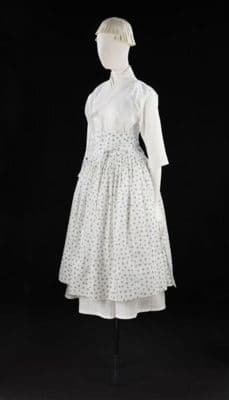
The fitted bodice and flared skirt that defined 1950s femininity finds two wildly different expressions here: the contemporary black leather mini that turns the silhouette sharp and rebellious, versus the traditional Korean hanbok that softens it into flowing, ankle-length elegance.
Text
Pull the Thread→
Follow this garment wherever the graph leads