V&A
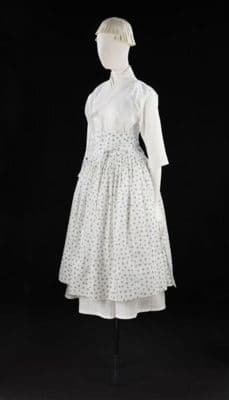
White Black Linen Cotton Cheollik Hanbok Dress
2020s · 2010s · Korean
Production
ready-to-wear
Material
linen cotton blend
Culture
Korean
Movement
Korean Wave fashion · Cottagecore
Influences
traditional Korean hanbok · 1950s fit-and-flare silhouette
A contemporary Korean dress that reinterprets traditional hanbok elements through modern minimalist design. The garment features a fitted sleeveless bodice with a high round neckline that transitions into a full, gathered midi-length skirt. The white linen-cotton fabric displays small black polka dots throughout. The silhouette echoes the jeogori and chima components of traditional Korean dress but simplified into a single garment. The waistline is clearly defined where the fitted top meets the voluminous skirt, creating the characteristic hanbok proportion. The fabric appears lightweight and structured enough to maintain the skirt's shape while allowing natural drape.
dressfit and flareround neckmidi
Connected To

69%
Influences·1950s fit-and-flare silhouetteMovement·Cottagecore
SHARED10 years · cross-culture
These two dresses reveal how the cottagecore movement has created an unexpected bridge between 1950s American suburbia and traditional Korean hanbok. The Western piece channels classic fit-and-flare with its nipped waist and circle skirt, while the Korean interpretation translates the same romantic impulse through the hanbok's characteristic high waistline and voluminous skirt, both rendered in that tell-tale cottagecore palette of white cotton dotted with tiny florals.
Pull the Thread→
Follow this garment wherever the graph leads