V&A
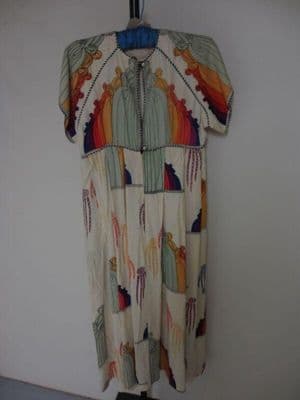
Cream Artificial Silk Cape Sleeve Shift Dress
1970s · 1970s · British
Designer
John Bates for Jean Varon
Production
ready-to-wear
Material
artificial silk
Culture
British
Movement
Glam Rock · Hippie / Counterculture
Influences
1960s mod geometric prints · Art Deco revival patterns
A knee-length shift dress featuring dramatic cape sleeves that extend from the shoulders in a flowing, wing-like silhouette. The artificial silk fabric displays a bold geometric print with vertical striped elements in orange, green, and purple against a cream background. White rickrack or braided trim outlines the neckline and sleeve edges, creating decorative contrast. The dress hangs straight from the shoulders without waist definition, typical of 1970s relaxed tailoring. The cape sleeves create substantial volume at the shoulders while tapering toward the wrists, embodying the period's embrace of theatrical, statement-making proportions in ready-to-wear fashion.
dressstraightround neckknee length
Connected To
Influences·1960s mod geometric prints
SHARED40 years · cross-culture
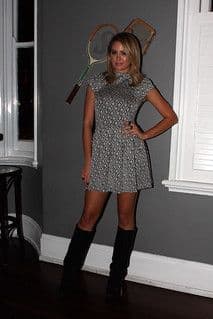
That '90s mini channels the same graphic punch as the '70s shift, both drawing from the mod movement's love affair with bold geometry—but where the earlier dress commits fully to its psychedelic rainbow cascade, the later one strips the concept down to stark black and white minimalism. The silhouettes tell the story of two decades: the '70s piece flows loose and easy with those dramatic cape sleeves, while the '90s version hugs and flares with body-conscious precision.
Echoes Across Time
1990s → 1970s · 40yr67%
SHARED
That '90s mini channels the same graphic punch as the '70s shift, both drawing from the mod movement's love affair with bold geometry—but where the earlier dress commits fully to its psychedelic rainbow cascade, the later one strips the concept down to stark black and white minimalism. The silhouettes tell the story of two decades: the '70s piece flows loose and easy with those dramatic cape sleeves, while the '90s version hugs and flares with body-conscious precision.
Influences·1960s mod geometric prints

2020s → 1970s
Pull the Thread→
Follow this garment wherever the graph leads