FASHIONPEDIA
Black White Geometric Fit and Flare Mini Dress
1990s · 2010s · Western
Production
ready-to-wear
Material
polyester blend
Culture
Western
Movement
Minimalism
Influences
1960s mod geometric prints · contemporary streetwear
A short-sleeved mini dress featuring a black and white geometric pattern with angular, interlocking shapes. The garment has a fitted bodice that follows the natural waistline before flaring into an A-line skirt that hits mid-thigh. The sleeves are cap-style, sitting close to the shoulder. The neckline appears to be a modest crew or high round neck. The geometric pattern consists of bold, graphic shapes creating an optical effect across the entire garment. The dress is styled with tall black boots that extend above the knee, creating a contemporary silhouette typical of 2020s casual fashion.
dressfit and flaremini
Connected To
Influences·1960s mod geometric prints
SHARED40 years · cross-culture
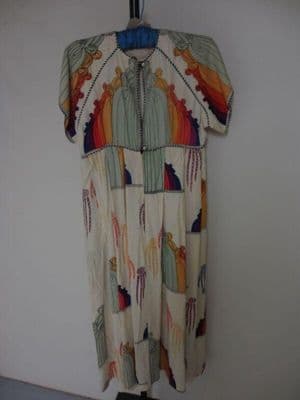
That '90s mini channels the same graphic punch as the '70s shift, both drawing from the mod movement's love affair with bold geometry—but where the earlier dress commits fully to its psychedelic rainbow cascade, the later one strips the concept down to stark black and white minimalism. The silhouettes tell the story of two decades: the '70s piece flows loose and easy with those dramatic cape sleeves, while the '90s version hugs and flares with body-conscious precision.
Pull the Thread→
Follow this garment wherever the graph leads