V&A
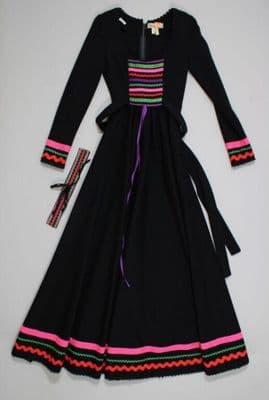
Black Wool Jersey Maxi Dress with Colorful Embroidery
1970s · 1970s · British
Designer
Gina Fratini
Production
ready-to-wear
Material
wool jersey
Culture
British
Movement
Romantic Revival · Hippie / Counterculture
Influences
medieval gown silhouette · folk costume striping
A floor-length black wool jersey dress featuring a fitted long-sleeved bodice with square neckline and flowing maxi skirt. The garment is decorated with vibrant horizontal stripes in magenta, orange, and other bright colors across the chest panel and repeated at the hem and cuff edges. Purple ribbon ties create a bow at the center front waist, emphasizing the fitted silhouette above the full skirt. The soft drape of the wool jersey creates gentle movement in the skirt while maintaining structure in the bodice. This design exemplifies early 1970s evening wear with its combination of medieval-inspired silhouette and bold folk-influenced color palette.
dressfit and flaresquare necklinefloor length
Connected To
Movement·Romantic Revival
SHARED130 years · cross-culture · cross-category
This Victorian shell cameo and 1970s maxi dress are separated by 130 years but united by the same romantic impulse—both conjure fairy-tale femininity through mythological storytelling and theatrical detail. The cameo's carved Ariel figure, all flowing hair and ethereal grace against honey-colored shell, finds its echo in the dress's folkloric embroidery and medieval silhouette, complete with lace-up bodice that could outfit a Pre-Raphaelite heroine.
Echoes Across Time
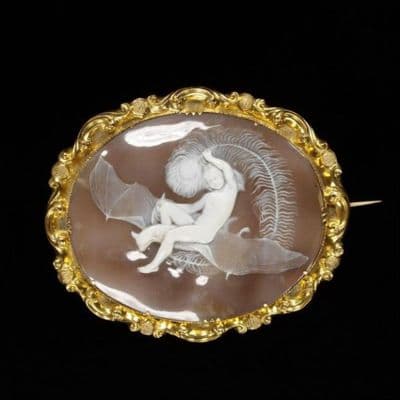
Romantic → 1970s · 130yr57%
SHARED
This Victorian shell cameo and 1970s maxi dress are separated by 130 years but united by the same romantic impulse—both conjure fairy-tale femininity through mythological storytelling and theatrical detail. The cameo's carved Ariel figure, all flowing hair and ethereal grace against honey-colored shell, finds its echo in the dress's folkloric embroidery and medieval silhouette, complete with lace-up bodice that could outfit a Pre-Raphaelite heroine.
Movement·Romantic Revival
1970s → 2020s
Pull the Thread→
Follow this garment wherever the graph leads