V&A
Navy Blue Cotton Dress Shirt
1980s · 1990s · British
Designer
Richard James
Production
ready-to-wear
Material
cotton
Culture
British
Movement
Power Dressing
Influences
1980s power dressing · Savile Row tailoring
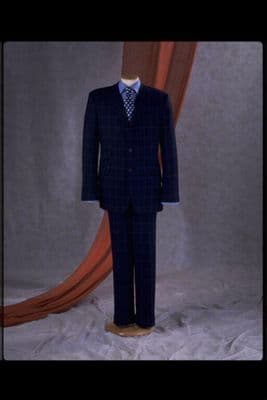
A navy blue business suit displayed on a headless mannequin, featuring a double-breasted jacket with peak lapels and matching straight-leg trousers. The jacket shows structured shoulders and a fitted waist typical of 1990s tailoring. Underneath is a white cotton dress shirt with a spread collar and French cuffs, paired with a geometric patterned tie in navy and light blue. The suit demonstrates the sharp, power-dressing aesthetic of the mid-1990s, with clean lines and precise construction that reflects the era's emphasis on professional authority and sartorial confidence in menswear.
shirtregular fitcollarlesship length
Connected To
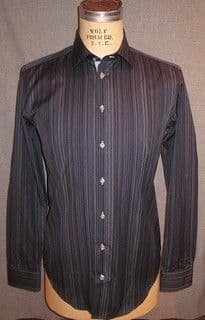
Influences·Savile Row tailoringWorn with·necktieWorn with·suit jacket
Echoes Across Time
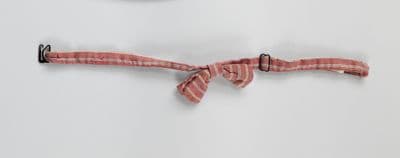
Wartime / Utility Fashion → 1980s · 50yr58%
SHARED
That striped bow tie carries the DNA of wartime pragmatism—the kind of cheerful make-do spirit that turned humble cotton into formal wear when silk was rationed for parachutes. Fast-forward fifty years to that navy dress shirt, and you see the same democratic impulse: cotton elevated through crisp tailoring and precise construction, proving that luxury isn't always about precious materials.
Worn with·dress shirtWorn with·suit jacketTechnique·machine-weaving
Pull the Thread→
Follow this garment wherever the graph leads