SMITHSONIAN
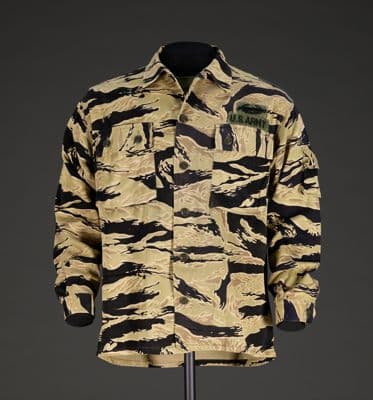
Tiger Stripe Camouflage Cotton Military Fatigue Jacket
Wartime / Utility Fashion · 1960s · American
Production
mass-produced
Material
cotton twill
Culture
American
Influences
Vietnam War military issue · tiger stripe camouflage development
A military fatigue jacket in tiger stripe camouflage pattern featuring irregular horizontal bands of tan, brown, black, and olive green. The jacket displays standard military construction with a button-front closure, chest pockets with button flaps, and a structured collar. The tiger stripe pattern consists of bold, organic stripes that break up the wearer's silhouette for jungle warfare concealment. The cotton twill fabric appears sturdy and practical, designed for durability in tropical combat conditions. The cut is loose and functional, allowing for ease of movement and layering over other garments. This represents the distinctive camouflage pattern developed for U.S. forces during the Vietnam War era.
jacketregular fithip length
Connected To
62%
Worn with·military bootsFunction·military-uniform
SHARED150 years
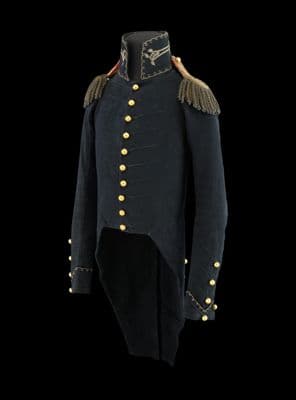
The gold buttons marching down Jackson's dark wool coat and the fractured tiger stripes of the Vietnam-era fatigue jacket represent two opposing philosophies of military dress: one designed to announce rank and command respect, the other engineered to disappear entirely.
Pull the Thread→
Follow this garment wherever the graph leads