SMITHSONIAN
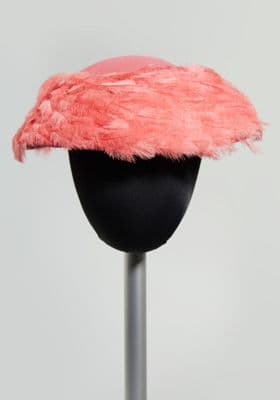
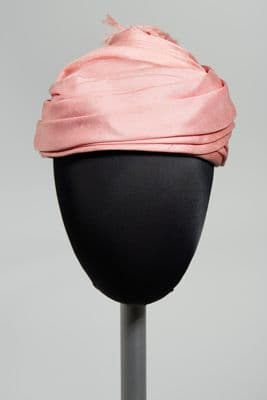
Pink Silk Dupion Draped Turban with Fringe
1970s · 1960s · African American
Production
handmade
Material
silk dupion
Culture
African American
Movement
Civil Rights Movement fashion · Hippie / Counterculture
Influences
traditional African headwrap techniques · 1960s sculptural millinery
A sophisticated turban-style headwrap constructed from coral-pink silk dupion fabric. The material is artfully draped and twisted to create sculptural volume and movement, with the fabric's natural body allowing for structured folds that maintain their shape. The wrapping technique creates asymmetrical draping with loose ends that cascade naturally, suggesting traditional African headwrap methods adapted for contemporary 1960s fashion. The silk dupion's subtle sheen and crisp hand provide both visual interest and structural integrity to support the elaborate draping. This headpiece exemplifies the period's embrace of non-Western fashion elements and the growing visibility of African American cultural expression in mainstream fashion.
headband/head covering/hair accessory
Connected To
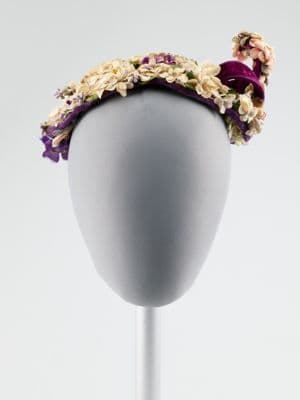
Influences·1960s sculptural millinery
SHAREDsame era · cross-culture · cross-category
These two hats reveal how the sculptural ambitions of 1960s millinery rippled out in opposite directions—one toward nostalgic prettiness, the other toward bold minimalism. The velveteen confection with its cascading fabric flowers reads like a milliner's fever dream of Victorian romance, all fussy abundance and calculated whimsy, while the pink silk turban strips away every ornament except for those knowing little fringe tails that punctuate its sleek geometry.
Pull the Thread→
Follow this garment wherever the graph leads