SMITHSONIAN
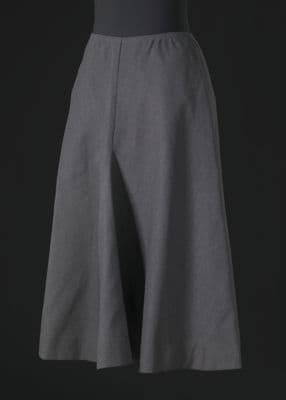
Charcoal Gray Wool Crepe Wide-Leg Culottes
1980s · 1980s · American
Designer
Arthur McGee
Production
ready-to-wear
Material
wool crepe
Culture
American
Movement
Power Dressing
Influences
Japanese hakama pants · 1940s palazzo pants
These charcoal gray wool culottes feature an extremely wide-leg silhouette that creates an almost skirt-like appearance when viewed from the front. The garment sits high at the natural waist with what appears to be an elastic or fitted waistband. The legs are cut exceptionally wide, extending well beyond the body's natural proportions, creating dramatic volume and movement. The wool fabric appears to have a smooth, crepe-like texture with a matte finish. The construction shows clean, pressed seams and a professional finish typical of 1980s power dressing. The length falls to approximately mid-calf, and the wide proportions reflect the decade's embrace of exaggerated silhouettes in professional women's wear.
skirtwide legmidi
Connected To
Movement·Power DressingWorn with·blouse
SHAREDsame era · cross-culture · cross-category
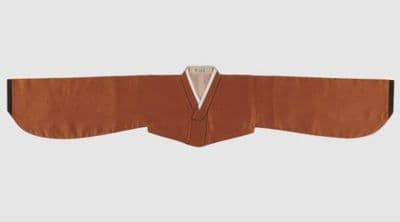
These two pieces reveal how power dressing in the 1980s wasn't just about shoulder pads and pinstripes—it was about claiming space through volume and structure. The charcoal culottes with their knife-sharp pleats and almost architectural width mirror the bolero's dramatic wingspan, both garments using fabric as territory to be conquered rather than body to be revealed.
Pull the Thread→
Follow this garment wherever the graph leads