SMITHSONIAN
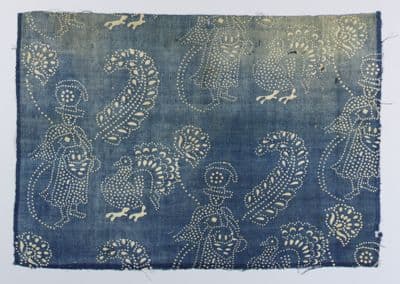
Indigo Blue Cotton Resist-Dyed Textile
Empire / Regency · 1800s · South Asian
Production
handmade
Material
cotton
Culture
South Asian
Influences
Indian paisley tradition
This cotton textile displays the distinctive indigo blue ground characteristic of traditional South Asian resist-dyeing techniques. White and cream paisley motifs are scattered across the surface in an organic, flowing arrangement. The paisley forms show intricate internal dotted patterns and curved teardrop shapes typical of Indian textile design. The fabric appears to be hand-woven cotton with areas of resist-dyeing creating the white patterns against the deep blue background. The textile shows some age-related fading and wear along the edges. This type of patterned cotton would have been used for garment construction or as decorative cloth, representing the sophisticated dyeing traditions of the Indian subcontinent during the early 19th century.
Connected To
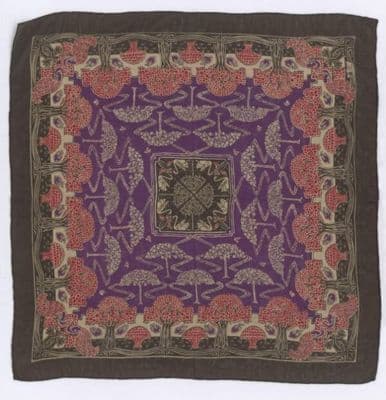
Influences·Indian paisley traditionMotif·paisley
SHARED170 years · cross-culture · cross-category
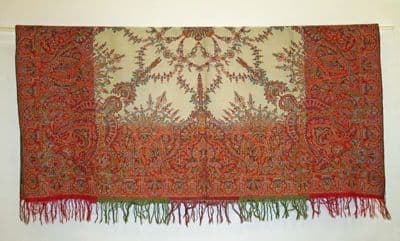
That purple silk scarf's meticulously arranged paisleys—each one perfectly mirrored in concentric borders—descends directly from the indigo cotton's more organic, scattered boteh motifs, but something crucial got lost in translation.
Text56%
Image78%
Entity42%
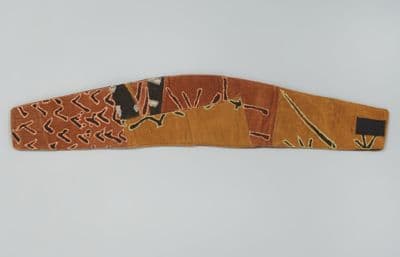
Technique·hand-weavingTechnique·resist-dyeing
SHARED190 years · cross-culture · cross-category
Text57%
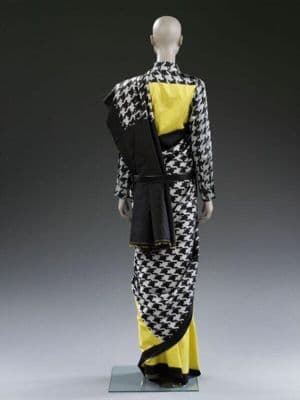
Technique·hand-weavingTechnique·resist-dyeing
SHARED210 years · cross-culture · cross-category
Text53%
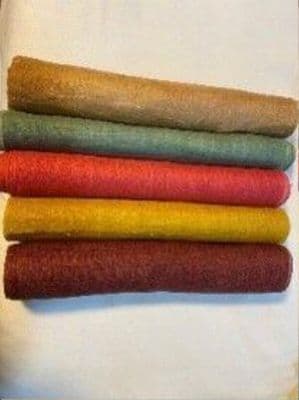
Technique·hand-weavingTechnique·resist-dyeing
SHAREDcross-culture
Text61%
Pull the Thread→
Follow this garment wherever the graph leads