SMITHSONIAN
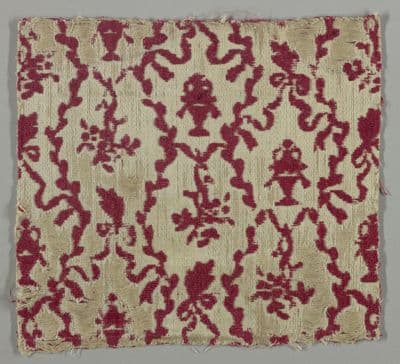
Burgundy Silk Velvet Fragment with Cream Foundation
Elizabethan · 1600s · British
Production
artisan-craft
Material
silk velvet
Culture
British
Influences
Italian Renaissance velvet traditions
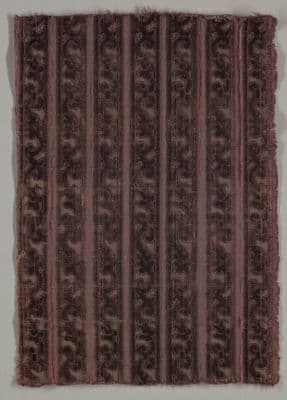
This textile fragment displays a sophisticated voided velvet technique where burgundy silk pile creates an intricate pattern against a cream silk foundation. The design features flowing botanical motifs with stylized flowers, leaves, and curving stems that create an all-over repeat pattern. The velvet pile has been selectively cut away to reveal the lighter ground fabric beneath, creating contrast through texture and color. The motifs show characteristic Baroque asymmetrical movement with organic forms that twist and flow across the surface. The fragment shows signs of age and wear, with some areas where the pile has been lost, revealing the underlying weave structure. This type of luxury silk velvet would have been used for high-status garments or furnishings during the 17th century.
Connected To
Technique·hand-weavingTechnique·velvet-cuttingMotif·abstract-organic
SHARED100 years · cross-culture
These two burgundy velvets reveal how the Renaissance appetite for luxurious surface traveled from Italian workshops to English courts, but with telling differences in execution. The Italian fragment shows the dense, saturated pile that made Venetian velvets legendary—every fiber seems to drink light, creating that signature Renaissance richness where pattern and ground merge in shadowy opulence.
Text92%
Image73%
56%
Technique·hand-weavingTechnique·velvet-cuttingMotif·abstract-organic
SHAREDsame era · cross-culture
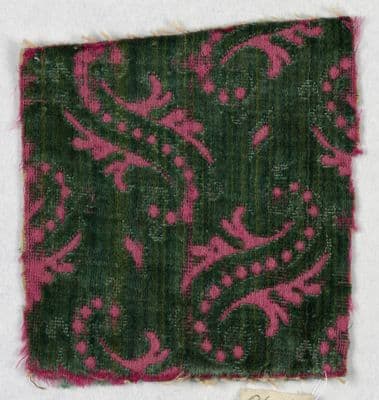
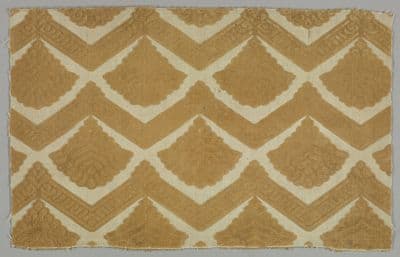
These two Elizabethan silk velvets reveal how the same luxurious technique could serve radically different aesthetic philosophies. The Italian fragment's magenta paisley swirls against deep green like exotic plumage, all curves and sensuous movement, while the British piece fractures into angular, almost Gothic fragments—burgundy shards scattered across cream like broken stained glass.
55%
Technique·hand-weavingTechnique·velvet-cutting
SHARED100 years · cross-culture
These two silk velvets reveal how the same luxurious technique could serve radically different aesthetic philosophies across a century of European taste. The earlier Elizabethan fragment sprawls with asymmetrical botanical motifs in deep burgundy against cream—nature tamed but still wild, each vine and flower placed with studied irregularity that feels almost modern in its organic flow.
45%
Technique·velvet-cutting
SHARED100 years · cross-culture
Text85%
Image
Echoes Across Time
Italian Renaissance → Elizabethan · 100yr59%
SHARED
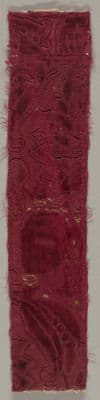
These two burgundy velvets reveal how the Renaissance appetite for luxurious surface traveled from Italian workshops to English courts, but with telling differences in execution. The Italian fragment shows the dense, saturated pile that made Venetian velvets legendary—every fiber seems to drink light, creating that signature Renaissance richness where pattern and ground merge in shadowy opulence.
Technique·hand-weavingTechnique·velvet-cuttingMotif·abstract-organic
Pull the Thread→
Follow this garment wherever the graph leads