SMITHSONIAN
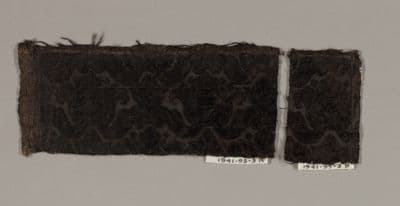
Dark Brown Silk Velvet Fragment with Embossed Pattern
Baroque · 1700s · Italian
Production
artisan-craft
Material
silk velvet
Culture
Italian
Influences
Baroque scrollwork · Italian silk weaving tradition
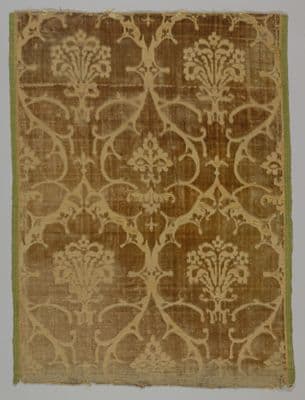
Two fragments of dark silk velvet showing intricate woven or embossed patterns. The larger piece displays a complex repeating motif with curved and scrolling elements typical of Baroque textile design. The velvet pile appears dense and lustrous despite age-related deterioration. Frayed edges indicate these are remnants from a larger textile, possibly cut from a garment or furnishing. The pattern shows sophisticated weaving technique with raised pile creating dimensional surface texture. The smaller fragment appears to be from the same textile. The dark coloration and rich pattern vocabulary reflect the opulent aesthetic preferences of 18th-century Italian textile production.
Connected To
71%
Influences·Baroque scrollworkTechnique·hand-weaving
SHARED100 years
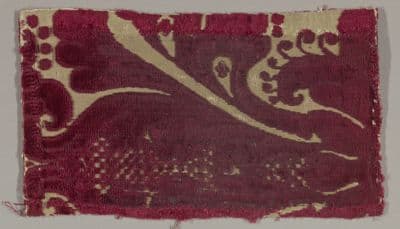
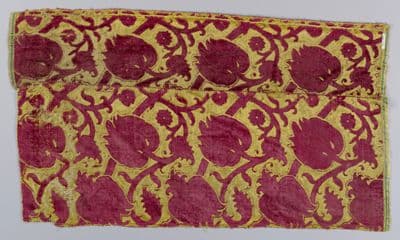
These two Italian silk velvets reveal how luxury textile makers refined their craft across a century of changing tastes. The earlier burgundy fragment shows the Elizabethan love of bold contrast—those cream-colored botanical scrolls pop against the wine-dark ground like jewelry against skin.
Text90%
Image81%
Entity47%
61%
Technique·hand-weavingTechnique·velvet-weavingMotif·scroll
SHARED100 years · cross-culture
Both fragments reveal velvet's aristocratic DNA through their obsessive devotion to pattern, but they speak different languages of luxury. The Spanish piece flaunts its wealth with that aggressive burgundy-and-gold pomegranate motif—each bulbous fruit practically screaming "look what I cost"—while the Italian fragment whispers its sophistication through subtler embossed scrollwork that catches light like a secret.
53%
Technique·hand-weavingTechnique·velvet-weaving
SHARED200 years · cross-culture
Text86%
Technique·hand-weavingTechnique·velvet-weaving
SHARED100 years · cross-culture
Text76%
Pull the Thread→
Follow this garment wherever the graph leads