V&A
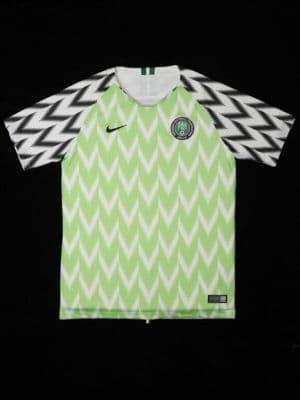
Bright Green Polyester Football Jersey with Chevron Pattern
2020s · 2010s · Nigerian
Designer
Nike
Production
mass-produced
Material
polyester jersey
Culture
Nigerian
Movement
Cottagecore
Influences
African textile patterns · 1970s geometric sportswear
This is a Nigerian national football team jersey featuring Nike's distinctive chevron pattern design from 2018. The garment displays a bold geometric zigzag pattern in bright green and white across the torso, with black and white chevron detailing on the sleeves. The jersey is constructed from lightweight polyester with moisture-wicking properties typical of modern athletic wear. It features a crew neckline with black trim and the Nigerian Football Federation crest prominently displayed on the chest. The Nike swoosh logo appears in black on the right chest. The cut is streamlined and fitted to the body for athletic performance, with raglan-style sleeves that allow for freedom of movement.
top/t-shirt/sweatshirtregular fitcrew neckhip length
Connected To
71%
Designer·NikeFunction·sportswear
SHARED20 years · cross-culture · cross-category
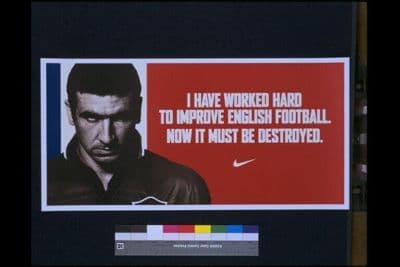
Nike's 2018 Nigeria World Cup jersey and Eric Cantona's incendiary 1996 "I have worked hard to improve English football" campaign represent the brand's evolution from provocateur to cultural diplomat.
Pull the Thread→
Follow this garment wherever the graph leads