2020s · 2020s · British
Designer
JW Anderson
Production
ready-to-wear
Material
knit jersey
Culture
British
Movement
Conceptual Fashion · Dopamine Dressing
Influences
Christiane Kubrick collaboration · photographic collage art
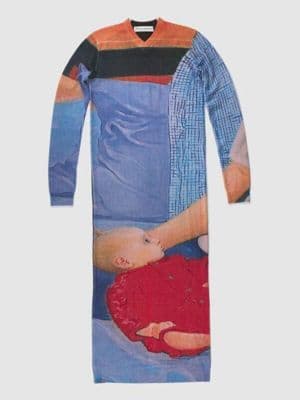
An oversized knit dress featuring a photographic print collage across its surface. The garment displays a patchwork of domestic imagery including what appears to be fabric swatches, household objects, and human figures rendered in saturated colors. The construction appears to be machine-knitted jersey with digital printing technology applied to create the complex photographic montage. The silhouette is deliberately oversized and unstructured, falling in a straight column from shoulders to mid-calf. The long sleeves extend past the hands, emphasizing the garment's exaggerated proportions. This piece represents contemporary fashion's embrace of digital printing capabilities and conceptual storytelling through wearable art.
Follow this garment wherever the graph leads
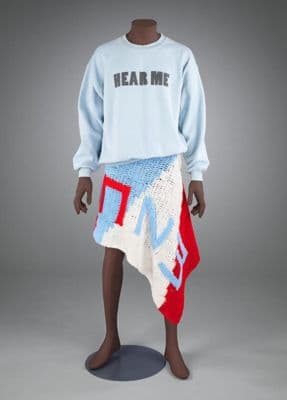
Both pieces weaponize the familiar comfort of everyday sportswear against our expectations, turning sweatshirt logic into something unsettling and strange. The first garment's photographic fragments—that disembodied hand holding what looks like red paint or blood—mirror the second's "HEAR ME" plea, both using the democratic language of casual wear to deliver messages that feel urgent and slightly unhinged.
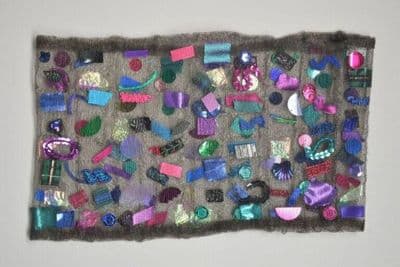
These two pieces reveal how British conceptual fashion's obsession with material transformation has evolved from the tactile to the digital. The 1990s cowl treats nylon monofilament like precious stones, creating an almost geological landscape of translucent fragments that catch light like scattered jewels across the throat.
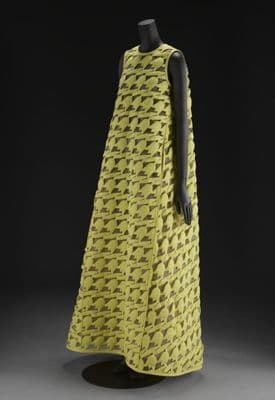
That acid-bright chartreuse shift with its scattered black geometric motifs and the photographic knit dress—with its strange collage of hands, fabric swatches, and color blocks—are both products of fashion's post-pandemic pivot toward aggressive optimism. The Korean dress deploys its neon intensity like armor, while the British piece layers domestic imagery (those hands kneading red dough, the gingham patches) into a surreal uniform that turns everyday life into wearable art.
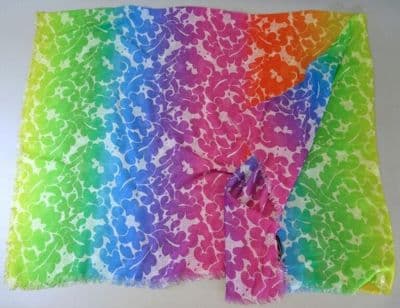
Both pieces traffic in the same hallucinogenic optimism that defined dopamine dressing's peak moment, but they arrive there through opposite routes. The knit dress splices together photographic fragments—a hand, striped fabric, that pool of red paint—like a glitched-out mood board come to life, while the scarf dissolves traditional camouflage into a psychedelic blur of lime and magenta that looks more like spilled nail polish than military concealment.