V&A
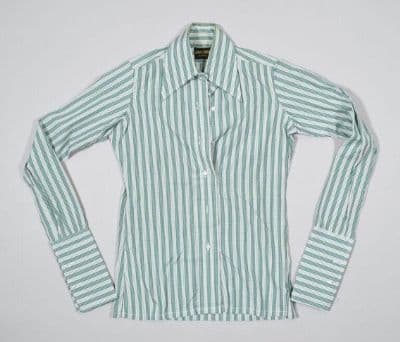
Green White Check Cotton Button-Down Shirt
1970s · 1970s · English
Designer
James Drew
Production
ready-to-wear
Material
cotton
Culture
English
Movement
Hippie / Counterculture
Influences
menswear shirting tradition
A precisely tailored women's shirt featuring vertical stripes in sage green and white on cotton fabric. The garment displays classic menswear-inspired construction with a pointed collar, full button front placket, and long sleeves with button cuffs. The fit is distinctly shaped through the torso, creating a feminine silhouette while maintaining the structured elements of traditional shirting. The stripes are evenly spaced and consistent in width, creating a clean geometric pattern. The shirt represents the 1970s trend of adopting and adapting masculine wardrobe staples for women's fashion, with careful attention to fit and proportion that distinguishes it from purely unisex styling.
shirt/blouseregular fithip length
Connected To
Influences·menswear shirting tradition
SHARED50 years · cross-culture
These two shirts trace the evolution of borrowed-from-the-boys dressing across five decades, but their DNA splits along class lines. The 1970s green striped shirt carries the crisp, almost institutional precision of English shirtmaking—note those knife-sharp creases and the way the stripes align perfectly at the seams, suggesting serious tailoring beneath its casual surface.
Echoes Across Time

1990s → 1970s · 50yr66%
SHARED
These two shirts trace the evolution of borrowed-from-the-boys dressing across five decades, but their DNA splits along class lines. The 1970s green striped shirt carries the crisp, almost institutional precision of English shirtmaking—note those knife-sharp creases and the way the stripes align perfectly at the seams, suggesting serious tailoring beneath its casual surface.
Influences·menswear shirting tradition

1990s → 1970s · 50yr66%
Pull the Thread→
Follow this garment wherever the graph leads