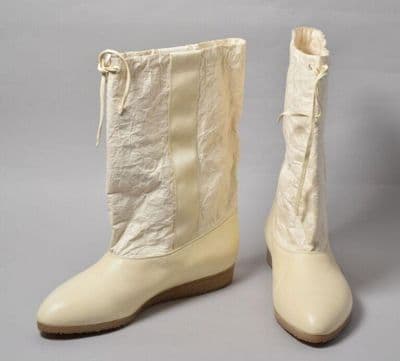
Deconstructivism · 1980s · Japanese
Designer
Miyake Design Studio
Production
artisan-craft
Material
leather and paper with nylon webbing
Culture
Japanese
Movement
Japanese avant-garde
Influences
Japanese avant-garde fashion · architectural deconstruction
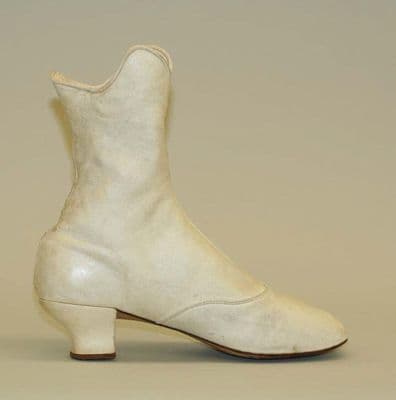
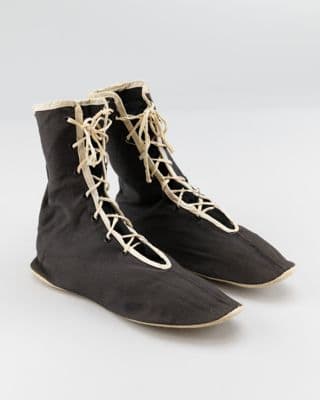
These experimental boots feature an unconventional construction combining traditional leather footwear with paper and nylon webbing elements. The upper portion appears to be made of crinkled paper or paper-like material in cream tones, creating a sculptural, architectural silhouette that extends well above the ankle. The lower portion consists of smooth leather in a pale cream color, forming a simple boot shape with a low heel. Nylon webbing details are integrated into the design, likely providing structural support to the paper elements. The overall form is geometric and avant-garde, reflecting Japanese experimental fashion's approach to deconstructing traditional garment categories and exploring new material combinations.
These boots trace a direct line through Japanese avant-garde's most radical impulse: the complete reimagining of what footwear can be. The earlier pair, with its crumpled paper and fabric upper lashed to a simple leather base, embodies the deconstructivist ethos of the 1980s—taking apart Western conventions and rebuilding them as wearable sculpture.

These boots trace a direct line through Japanese avant-garde's most radical impulse: the complete reimagining of what footwear can be. The earlier pair, with its crumpled paper and fabric upper lashed to a simple leather base, embodies the deconstructivist ethos of the 1980s—taking apart Western conventions and rebuilding them as wearable sculpture.


Follow this garment wherever the graph leads
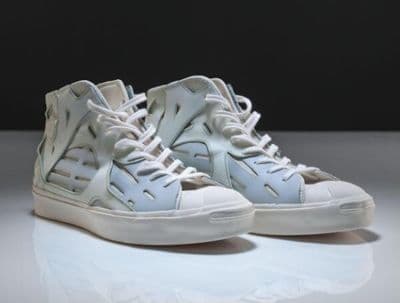
These boots from the deconstructivist wave and the contemporary cutout sneakers both treat footwear like architectural blueprints come to life. The Japanese boots layer paper, leather, and webbing in visible construction lines that read like exposed structural elements, while the Chinese sneakers carve geometric voids into pristine white leather, creating negative space as deliberately as the positive.
Lineage: “Japanese avant-garde tailoring”
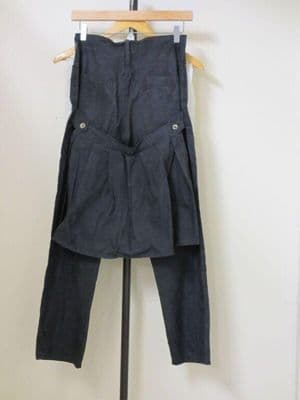
These pieces reveal how deconstructivist thinking traveled from Tokyo's avant-garde labs to London's street-smart studios in the late '80s and early '90s. The boots' patchwork of cream leather, crinkled paper, and utilitarian webbing shares DNA with the trousers' detachable apron flap and industrial polyurethane coating—both garments treat clothing as modular systems you can break apart and rebuild.
Lineage: “Japanese avant-garde”
These boots reveal how Japanese deconstructivism split into two distinct dialects within the same movement. The cream boots with their patchwork of leather, paper, and nylon webbing read like a gentle manifesto — all visible seams and material honesty that asks you to reconsider what a boot even is.
These boots from the deconstructivist wave and the contemporary cutout sneakers both treat footwear like architectural blueprints come to life. The Japanese boots layer paper, leather, and webbing in visible construction lines that read like exposed structural elements, while the Chinese sneakers carve geometric voids into pristine white leather, creating negative space as deliberately as the positive.