V&A
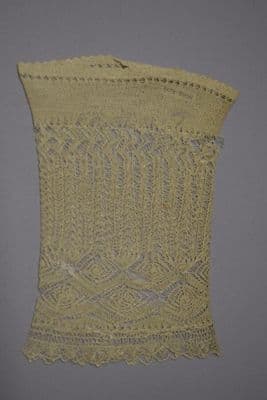
Cream Wool Mittens with Traditional Knitted Patterns
Empire / Regency · 1800s-1840s · English
Production
handmade
Material
wool
Culture
English
Influences
traditional English knitting patterns
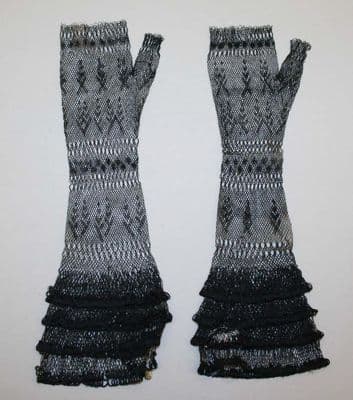
A single cream-colored wool mitten displaying intricate traditional knitting patterns. The construction features multiple decorative bands with geometric motifs including diamond lattework, zigzag chevrons, and cable-like twisted stitches. The ribbed cuff shows fine gauge knitting with a scalloped or picot edge detail. The body of the mitten demonstrates complex colorwork or textural knitting techniques creating raised relief patterns against the stockinette ground. The overall construction reflects skilled domestic needlework typical of early 19th-century English knitting traditions, where elaborate patterning served both decorative and practical warming functions during cold weather.
glove
Connected To
50%
Technique·knitting
LINEAGE60 years · cross-culture · cross-category→ directed
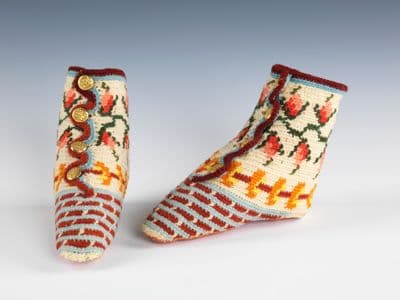
Lineage: “Pennsylvania German folk patterns”
These two pieces trace the migration of European folk knitting across the Atlantic, where intricate cable patterns gave way to bold colorwork storytelling. The English mittens display the mathematical precision of Aran-style cables—those interlocking diamonds and twisted stitches that required memorized sequences passed down through generations—while the American bootees translate that same domestic virtuosity into pictorial motifs, trading structural complexity for narrative charm.
Text68%
Image75%
Entity19%
Technique·knittingMotif·lattice-trellis
SHARED70 years · cross-culture
Text73%
Technique·knitting
LINEAGE180 years · cross-culture · cross-category→ directed
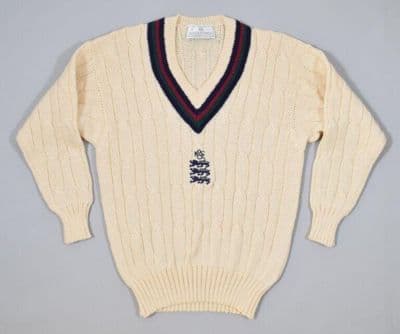
Lineage: “traditional cricket whites”
These two pieces trace the DNA of British knitting from drawing room to cricket pitch—the Regency mitten's intricate geometric lacework and the 1990s cricket sweater's cable ribs both deploy the same fundamental vocabulary of twisted stitches and patterned texture. What separates them isn't just 180 years, but a shift from ornamental femininity to sporting masculinity, yet both rely on knitting's ability to marry function with decoration.
Technique·knitting
LINEAGEcross-category→ directed
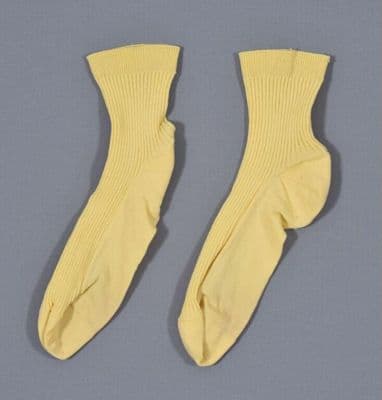
Lineage: “traditional English knitting patterns”
These yellow ribbed socks and cream wool mittens are separated by two centuries but united by the fundamental grammar of English knitting—that methodical interlocking of loops that creates both the sock's simple vertical ribs and the mitten's intricate geometric lattice.
Text
Echoes Across Time
Empire / Regency → Victorian Late / Bustle · 60yr50%
LINEAGE
These two pieces trace the migration of European folk knitting across the Atlantic, where intricate cable patterns gave way to bold colorwork storytelling. The English mittens display the mathematical precision of Aran-style cables—those interlocking diamonds and twisted stitches that required memorized sequences passed down through generations—while the American bootees translate that same domestic virtuosity into pictorial motifs, trading structural complexity for narrative charm.
Technique·knitting
Victorian Late / Bustle → Empire / Regency
Pull the Thread→
Follow this garment wherever the graph leads