THE MET
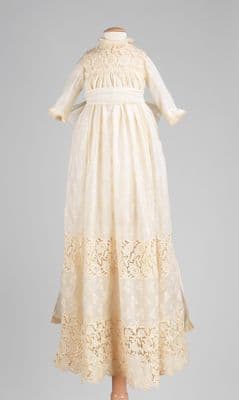
Cream Cotton Lawn Christening Gown with Handwork
Fin de Siecle / Gibson Girl · 1890s · American
Production
handmade
Material
cotton lawn
Culture
American
Influences
Victorian infant wear traditions
This christening gown displays the elaborate handwork characteristic of late Victorian infant wear. The dress features a high neckline with gathered fabric creating a soft yoke effect. Long sleeves with gathered cuffs extend well beyond infant hand length, typical of ceremonial garments. The bodice flows into a full-length skirt without waist definition. Multiple tiers of intricate cotton lace insertion and edging create horizontal bands across the lower portion of the skirt, demonstrating the period's preference for ornate surface decoration on special occasion garments. The lightweight cotton construction allows for delicate gathering and the extensive lacework that was both fashionable and symbolic of family prosperity during this era.
dressa-linehigh neckfloor length
Connected To
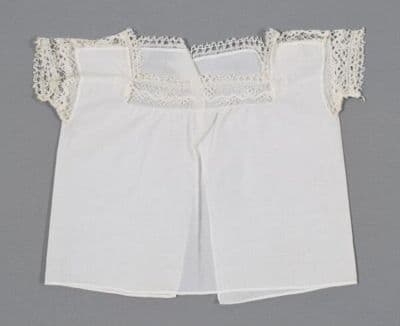
Worn with·diaperTechnique·lacework
SHARED40 years · cross-culture · cross-category
These two garments speak the same language of Victorian devotion to handwork, separated by decades but united in their obsessive attention to white cotton and lace. The christening gown's elaborate tiers of what appears to be Valenciennes or similar bobbin lace echo the intricate edgings on the baby shirt, both pieces treating infant skin as worthy of the same decorative intensity lavished on adult formal wear.

Pull the Thread→
Follow this garment wherever the graph leads